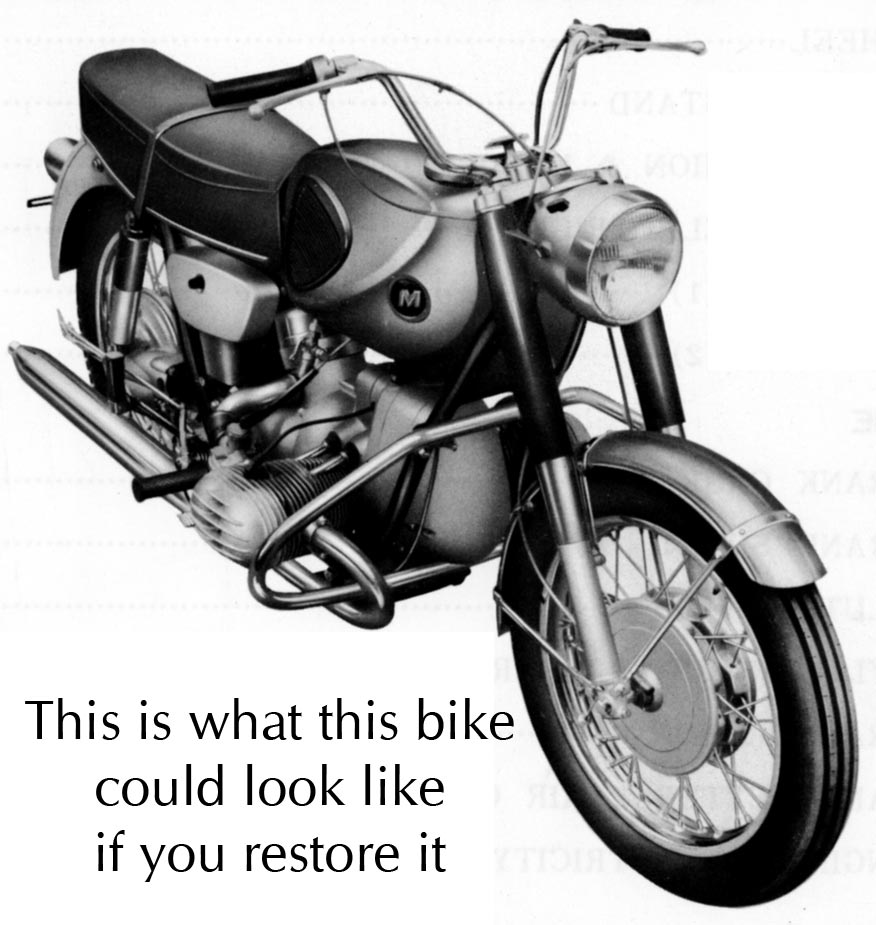
DESCRIPTION: Offered for sale is a 1965 Marusho model ST 500cc opposed twin, DISASSEMBLED, essentially complete, partially restored, with numerous NOS and re-chromed parts.
I will leave this web page in place after I have sold the Marusho, as it may be useful to people who need to see the individual parts of a Marusho, or who are considering purchasing one.
To contact me please send me e-mail.
HISTORY: This bike, which has frame number F9-0544 and motor number 2-0519, and is one of about 600 of this model and fewer than 900 of all Marushos, was sold by a dealer in Harrisburg in Pennsylvania. The owner sold it to a Maryland rider in 1976 and I received it from him in 1984, so I have had it for 28 years. In 1984 I titled it in my name in Virginia. A copy of the title is at the end of this web page. It was my intention to restore it, so over the years I collected parts, had the cylinders bored, replaced the rims and spokes, etc.
Do you want to save a copy of this webpage on your computer? For a PDF copy (4.3mb) click here.
I have decided to keep only 1 Marusho and 2 Lilacs. Since my restored 1966 Marusho Magnum is essentially the same bike as this model ST, I am selling the ST. Earlier this year I sold my 250cc 1960 Lilac LS-18/1 and in earlier years sold my 1960 LS-18/2 and my 1967 Marusho Magnum Electra.
Why buy this Marusho? Marushos are not hard to find. Several are sold on ebay each year. Virtually all are incomplete and many are stripped parts bikes. It is common for the following parts to have been removed by previous owners: Tank badges, tool box, engine front cover, exhaust system, headlight assembly, seat, carburetors, air intake tubes and air cleaner assembly, knee pads and petcock. Of these items only the exhaust system, seat cover and petcock can be purchased as reproductions or similar-type parts. It is very difficult to complete a stripped Marusho, since most are stripped of the same parts. If you are lucky enough to get a complete Marusho it is probable that it has been restored using some incorrect techniques, and it is a certainty that it will have some surprises mechanically. After all, these bikes are now close to 50 years old.
If you would like a Marusho that could be restored to essentially original condition, and which will not frustrate you too badly by making you search for unobtainable parts, this is the one you want. You may examine the copious photographs below and inspect all the parts. If there are particular parts you'd like to view with more resolution, ask me and I'll send the original photos, which are 4mb each vs these which are 100kb each. If you have questions I will be able to answer them.
How complete is this bike? I have high standards when it comes to describing a bike. No bike is complete. Any bike on ebay will at the least be missing the spare key, the tool kit, the owners manual or something else. There will be a few minor bits missing from this bike, no doubt, and you will not get an owners manual or tool kit, which I did not receive with the bike. I have included a copy of my book so you'll have all the information that the factory published about the bike.
Why buy from me? I have been involved with Marushos since 1975 and edited the Marusho/Lilac Owners Club newsletter from 1977-84. I have managed this website since 1997 and corresponded with well over a thousand Marusho and Lilac owners. I am in the phone book and have been at the same address since 1981. My ebay userid is 'MARUSHOLILAC' and I have perfect feedback. I'm retired from the Smithsonian Institution. I can provide references, including 3 overseas bike sales. You can e-mail or phone me any time (e-mail preferred since I like to keep a digital record of my many contacts). I am not afraid of crating and packing. . . .
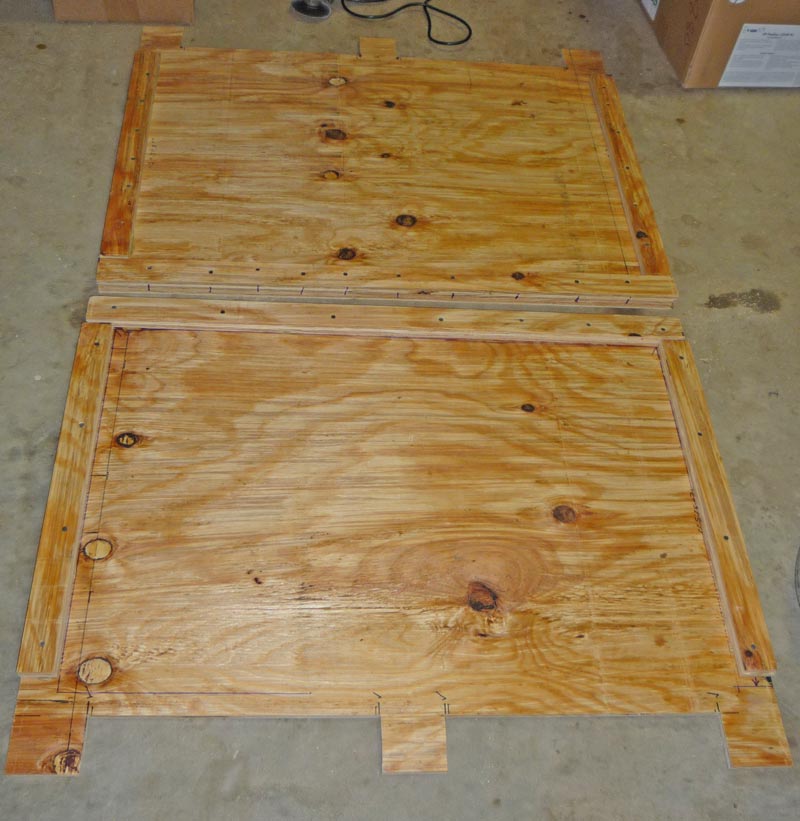
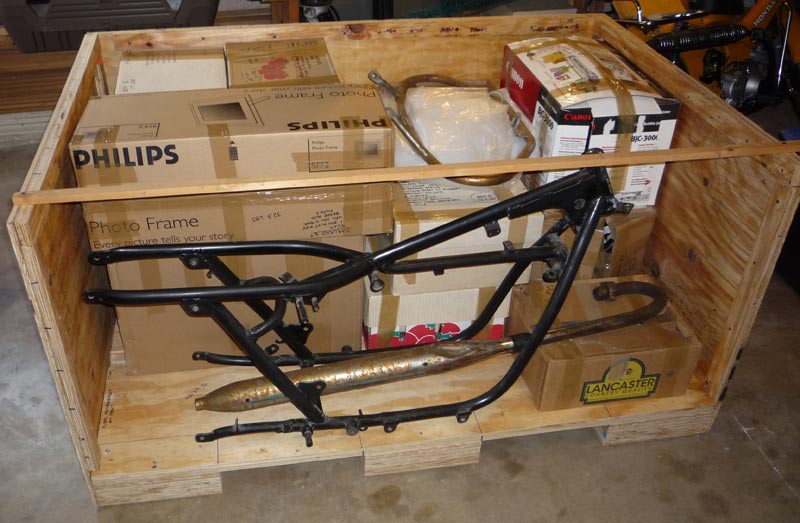
Crating and packing: I have built a crate (photos at the end of this web page) which is compact enough to fit in your pickup or possibly your van or SUV. The crate is made entirely of plywood and is very strong. It meets the requirements of the EU for crate materials which cannot support pests, in case my buyer is in Europe or the UK. The cost of crating is included in the selling price, as is my transporting the crate to a Northern Virginia freight depot, if needed. If you are a US buyer I will choose the shipper and obtain a quote before any payment is made. You will then pay me the cost of the bike plus the cost of shipping. Full value insurance will be required. It is unlikely that the shipping company can damage the contents of my strong crate, but they do lose shipments. At your end you can elect to specify home delivery or you can drive to the depot and have the crate folklifted into your vehicle, saving about $75. You will be able to disassemble the crate with only a Phillips screwdriver, though a powered driver is best.
If you are overseas: It is becoming hard to find a shipper for a crated motorcycle. There are many companies offering shipping of uncrated vehicles, at extraordinarily high prices. We will have to discuss your shipping requirements. An approach that I used this year for a UK buyer was to ship his bike along with a number of other bikes that were being exported to a UK dealer. The dealer charged a reasonable fee and handled Customs. If you know of a dealer in your country that regularly receives shipments of vintage bikes from the US you can discuss adding your bike to his shipment. I would simply ship the Marusho to his agent.
Because the bike is disassembled it should be possible to describe the shipment as a crate of motorcycle parts. This may reduce the paperwork associated with shipping a 'motor vehicle'.
Top end: Valve covers, cleaned; Cylinders (cleaned, bored oversize, unused since boring, with push rod tubes); heads; Pistons (BMW R50S - new), pins and clips; Valve Train. These R50S pistons are very expensive ($448.10/pair street price) and they are the best solution for rebuilding a Marusho motor. There are NO BROKEN FINS on the heads or cylinders.
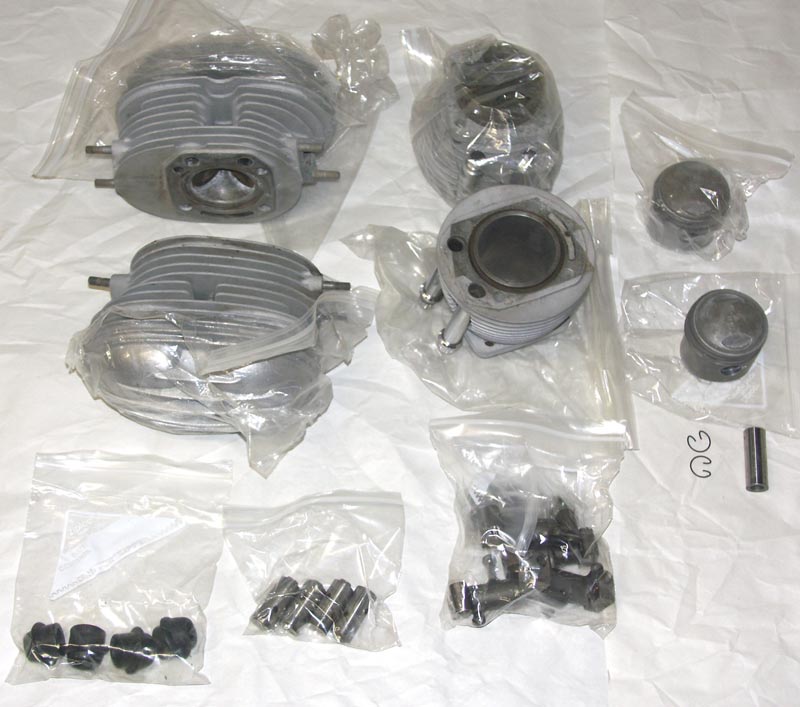
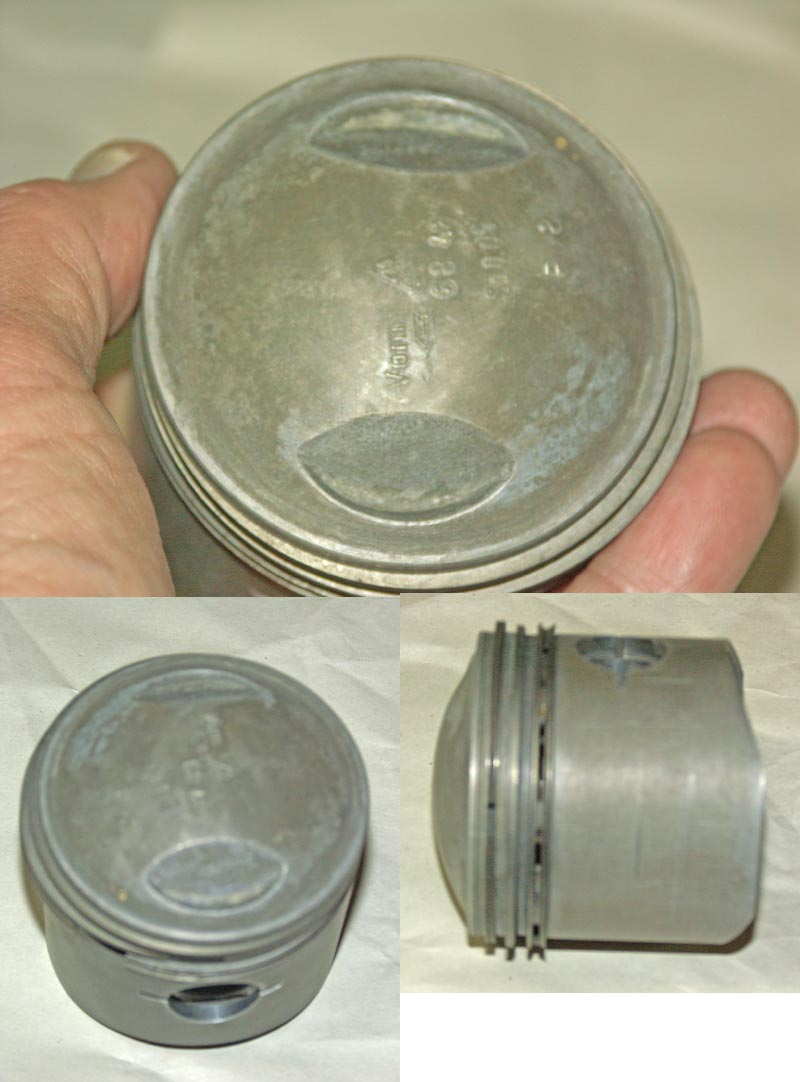
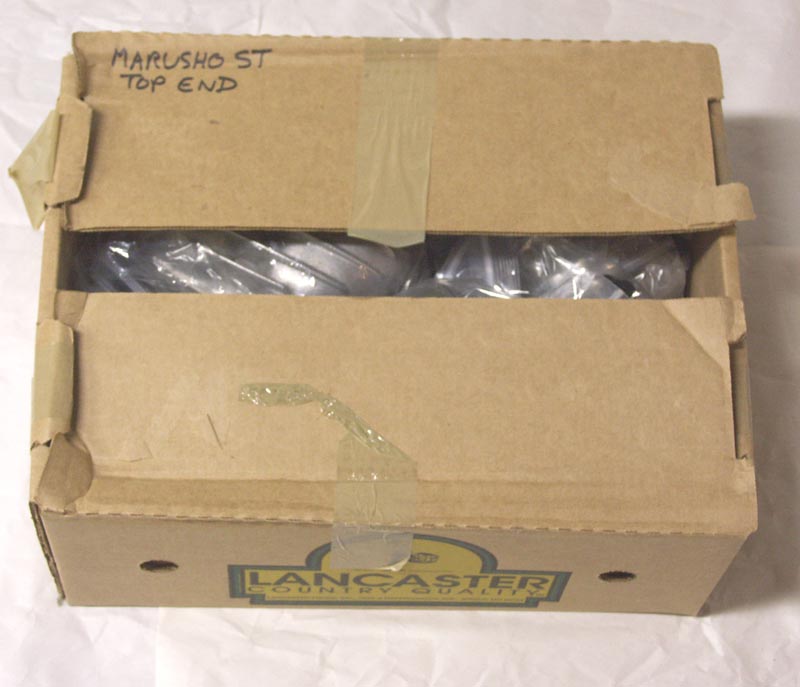
Box containing top end components.
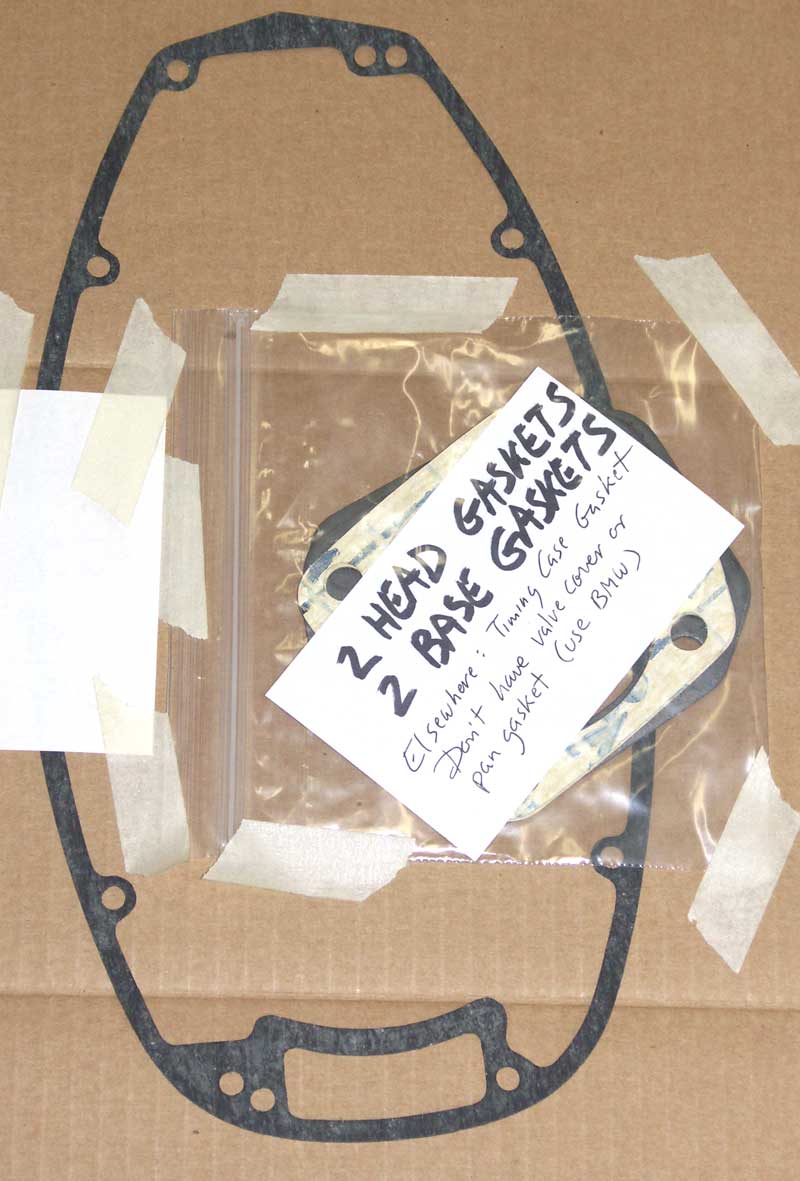
Gaskets -- Timing Case (new); Head and Base gaskets (new). I do not have the valve cover gaskets or oil pan gaskets. You can use BMW/2 according to some of my contacts:
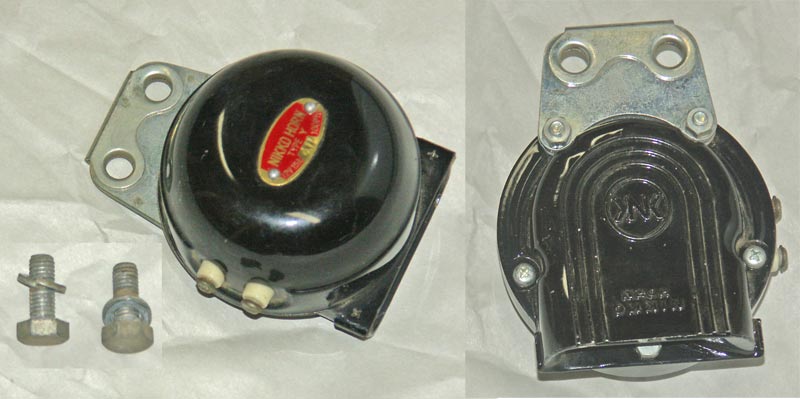
Horn with bolts. I think this is NOS but I'm not sure.
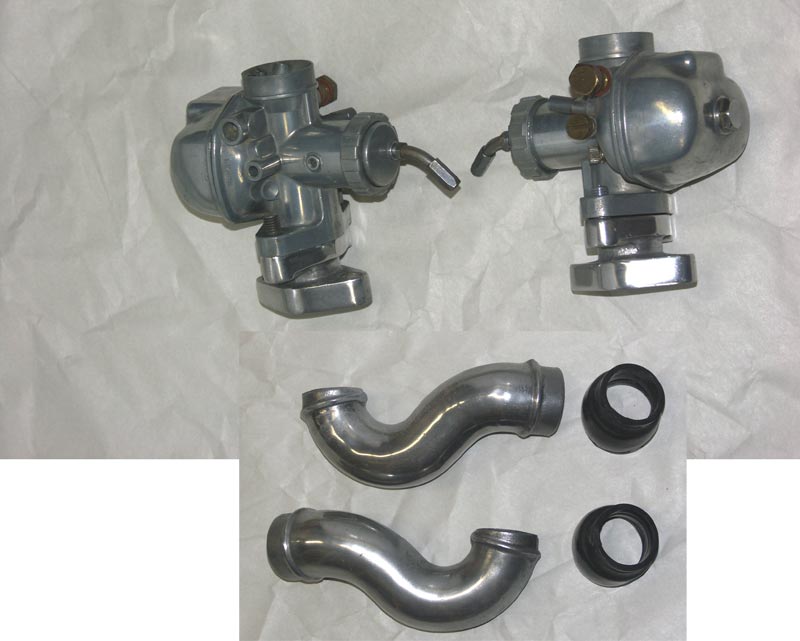
Carburetors (polished, lacquered, with aluminum intake manifolds); (2) Excellent polished, lacquered Air Intake Tubes with Rubber Boots. My notes say that I am still looking for (2) 'banjo' fittings to connect the gas line and possibly (1) of the carb slide clips. I may or may not have found these and failed to record whether they are indeed in the boxes, sorry. A number of people need these air tubes. You could have a foundry duplicate them and sell them if you want to do something nice for your fellow Marusho owners.
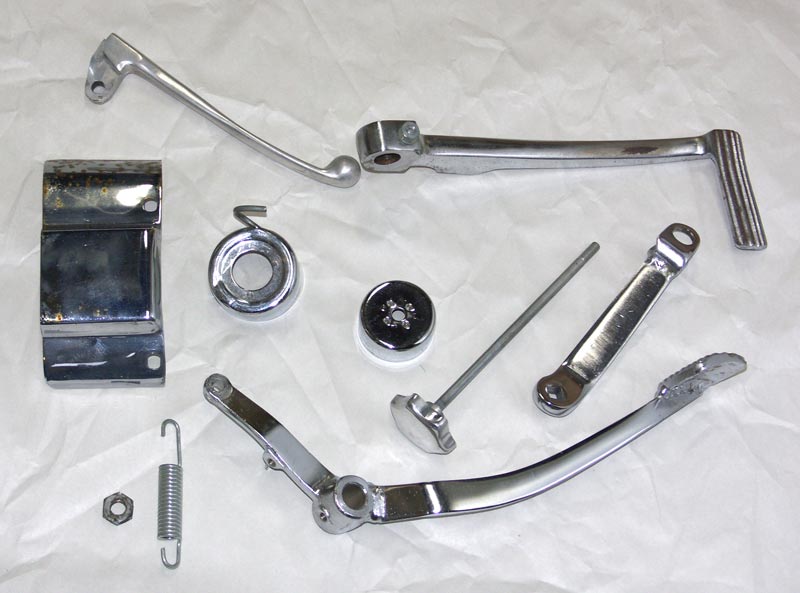
Good but not perfect Kick Start Lever, nut and bolt; NOS Brake Lever; NOS Steering Damper Knob; NOS Chromed Steering Damper Cover; Re-chromed but dented Kickstart Spring Cover (dent should not show when installed) with good original spring; Good U-joint cover (needs re-chroming); NOS Sidestand Spring with original nut; NOS Brake Lever; Re-chromed Rear Brake Arm:
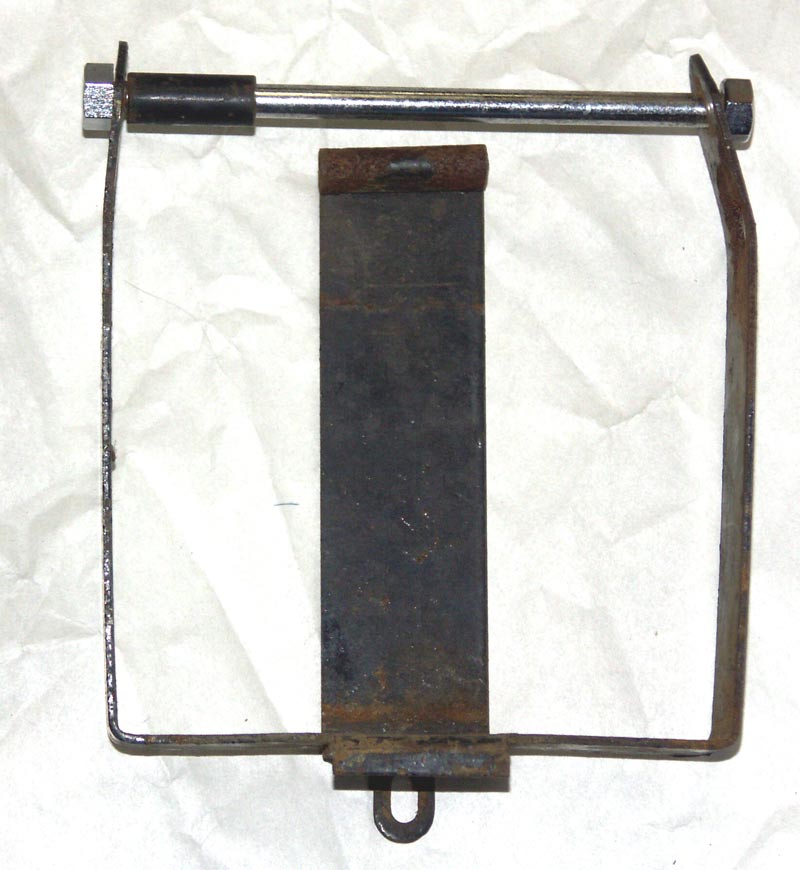
Battery Holder (needs straightening and painting); Re-chromed Battery Holder Bolt with Nut and Spacer. As I note elsewhere, the drain hose hole will have to be elongated to accomodate the batteries currently available.
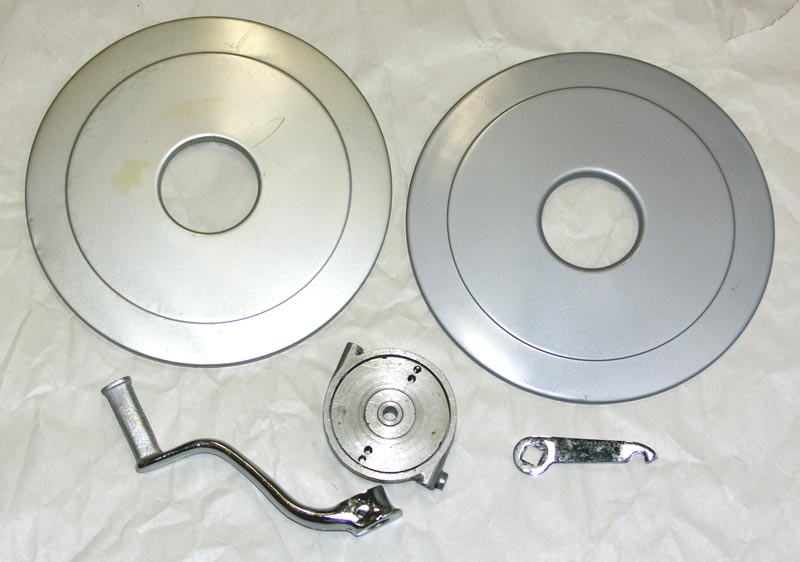
(2) Hubcaps (one excellent, one very good needing minor dent filling); Throttle Cable Divider (as used on ST, not on Magnum or Electra); Re-chromed Shift Lever; Very good Front Wheel Brake Arm (needs re-chroming).
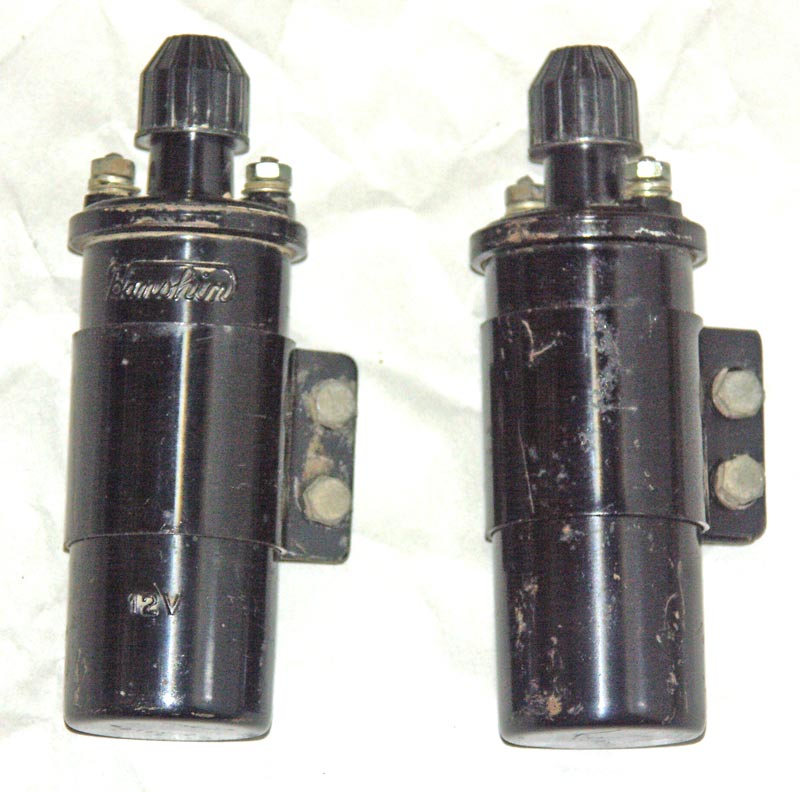
(2) Coils, original, with all fittings, cleaned but not painted:
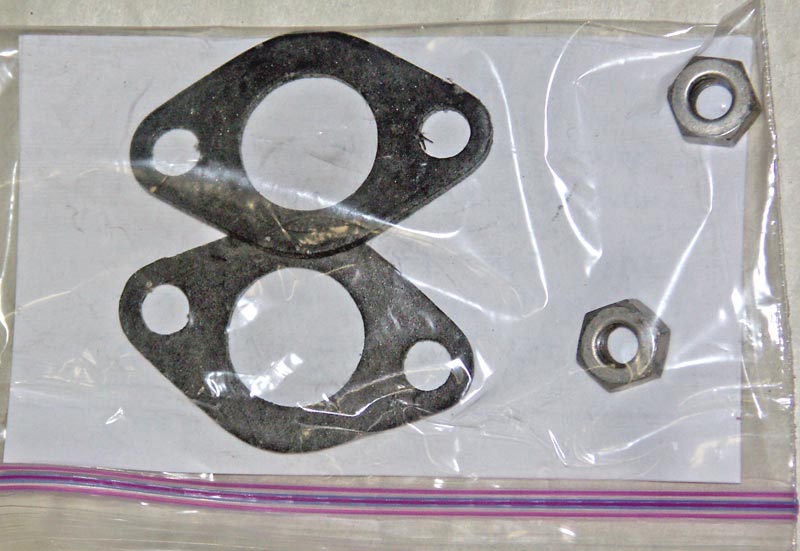
(2) NOS Gaskets, Intake Manifold-to-head; (2) Carb-to-manifold nuts (the other two are attached to the carbs).
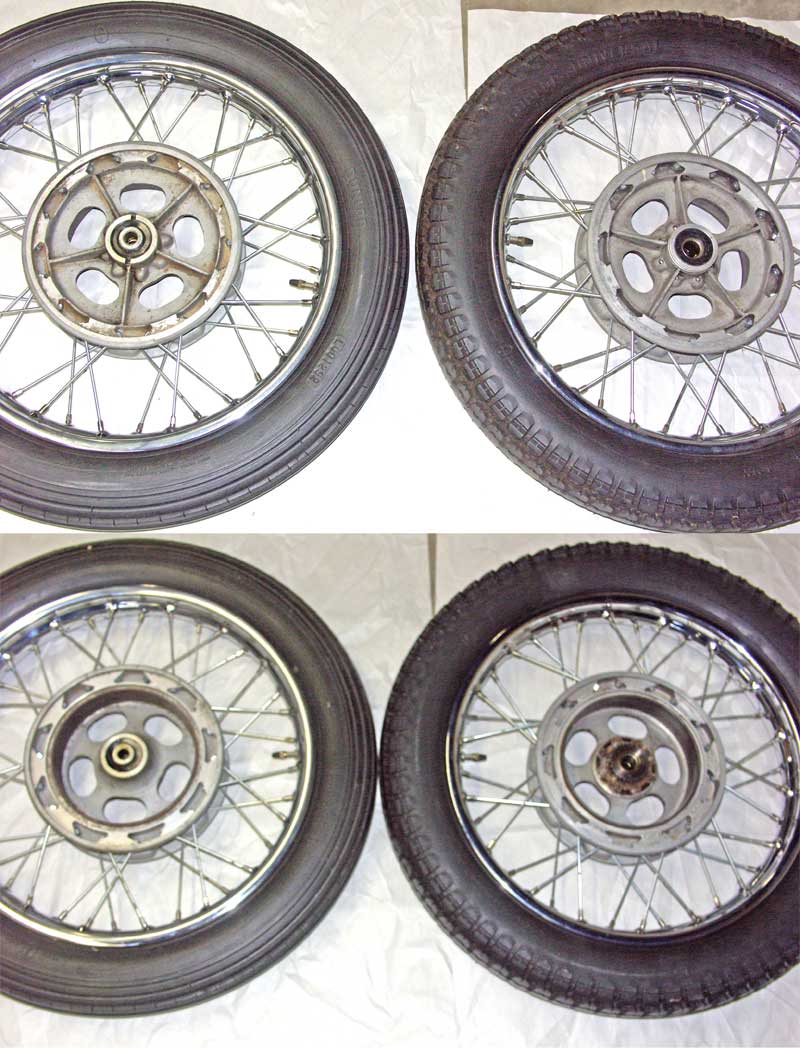
Wheels and Tires. Original 1965 tires, suitable only for show. Tubes and rim strips have been replaced but must be replaced again before riding. Hubs have been cleaned with naval jelly. Wheels re-laced with NOS correct rims and spokes/nipples. This is an older job and is very good but no longer perfect.
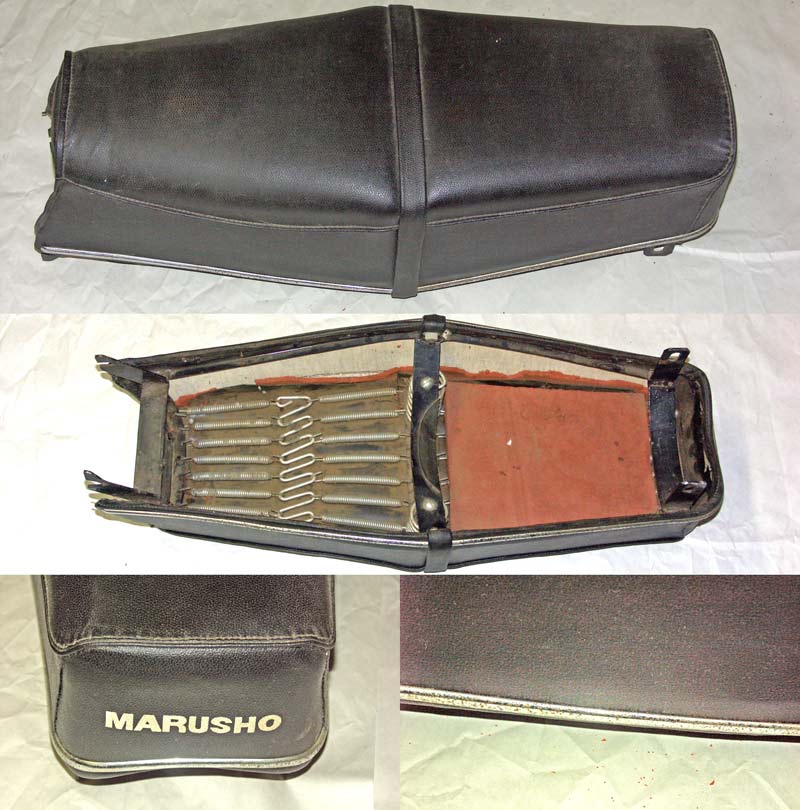
Seat, original ST-only type with springs (later models used foam over steel pan). Restorable. Cover is excellent with no rips. Frame and springs are excellent. Bright trim has medium rust. All foam must be replaced. Good news: The Yamaha YDS3 used the same seat cover and possibly the same seat components. If you wish to replace the cover you'll have to deal with the stenciling on the rear. I have no information about whether the foam is available as a Yamaha part.
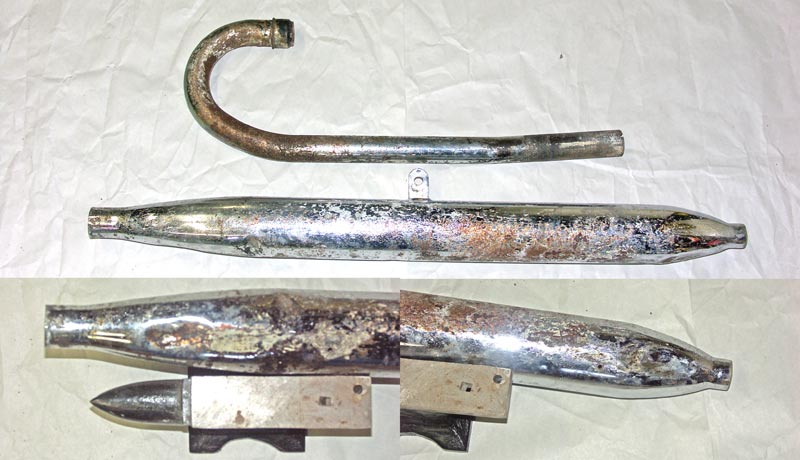
Left-hand Exhaust system. It looks better than these photos. The muffler and exhaust pipe are re-chromable. There are two dents on the underside of the muffler where the center stand hits. The center stand uses a rubber stopper. When this falls off or wears out, the stand hits the muffler. There is also a dent on the underside of the muffler at the rear.
Even though the exhaust system is restorable, I recommend that you purchase a new system in stainless steel from Barry Bligh in Australia (more details below). Then I would sell the original system.
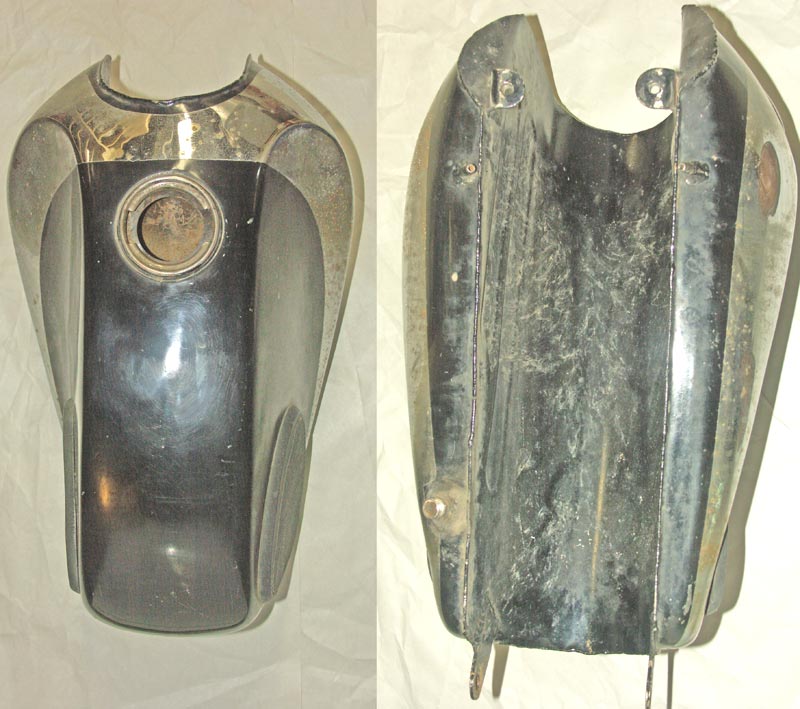
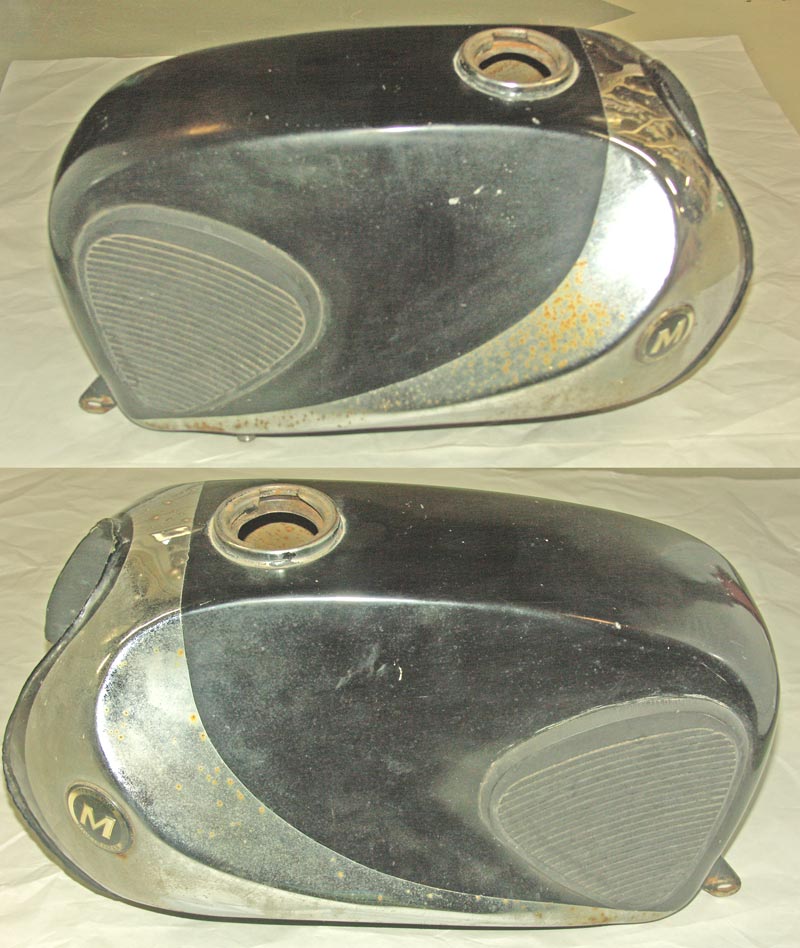
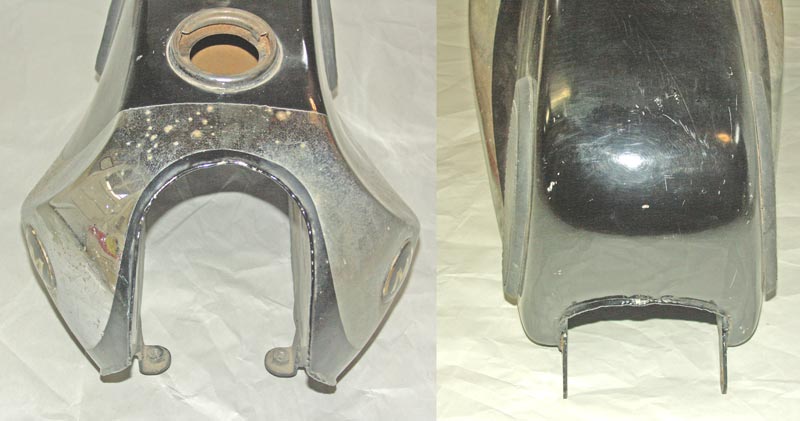
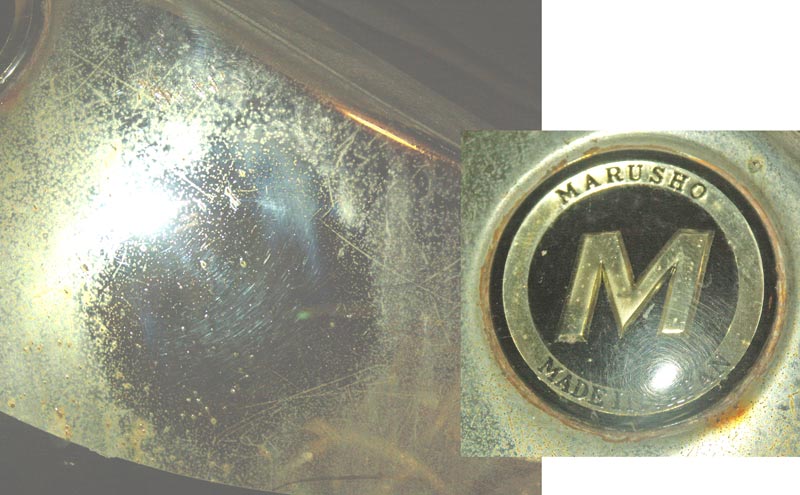
Tank. Good, rechromable condition (better than the photos), with original paint, some rust inside, no dents; good badges, kneepads. See details photo below -- I polished a spot to remove some of the surface rust.
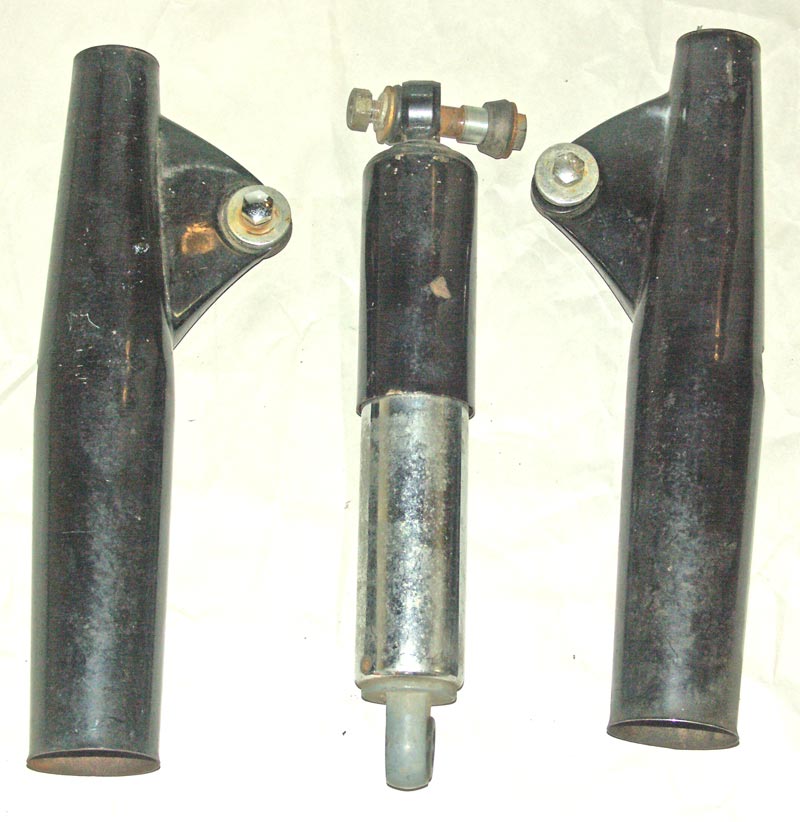
Fork covers: Good condition, original paint. Right-hand shock -- easy to disassemble (just unscrew, no compression needed).
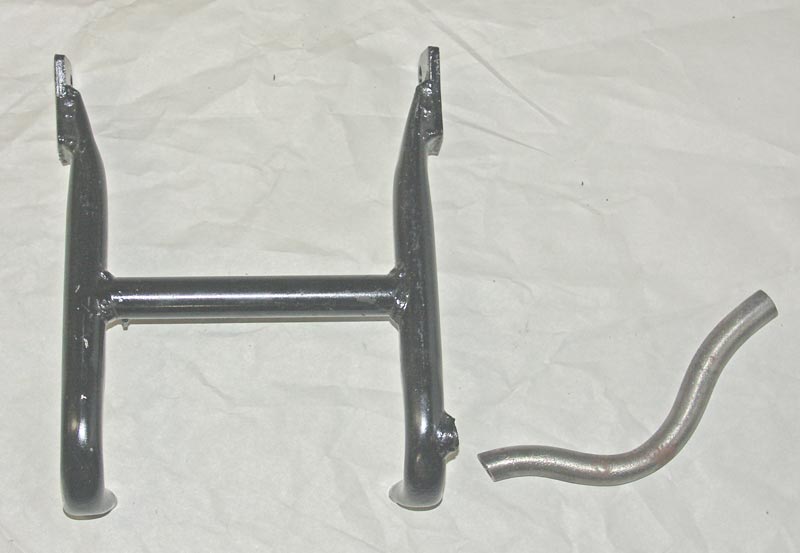
Center Stand: The step bar is broken off, must be re-welded. This is a common problem with Marushos.
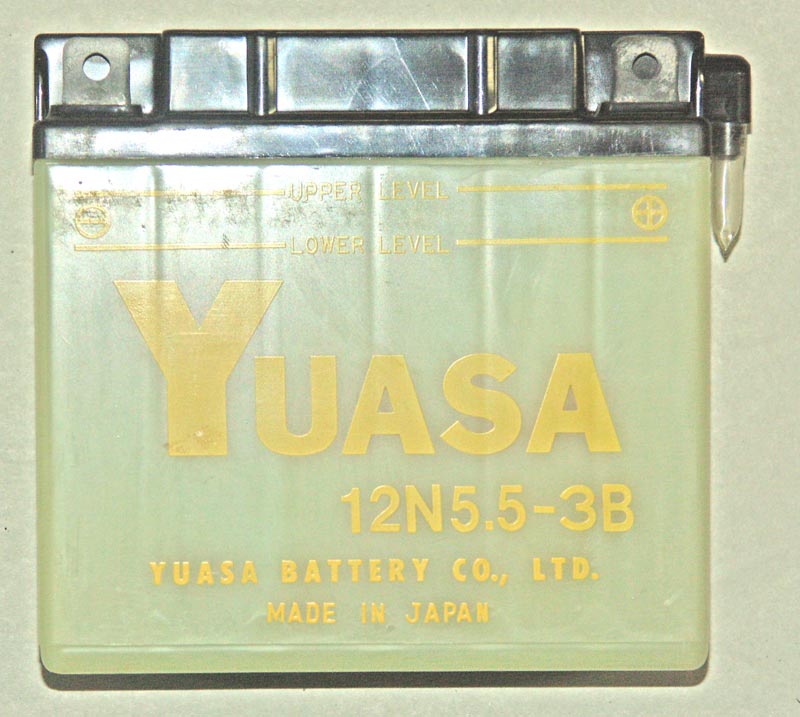
NOS Yuasa battery 12N5.5-3B. The original battery has not been made for many years, but this model has the sme dimensions. The hole in the battery carrier must be elongated to accommodate the new style drain hose fitting.
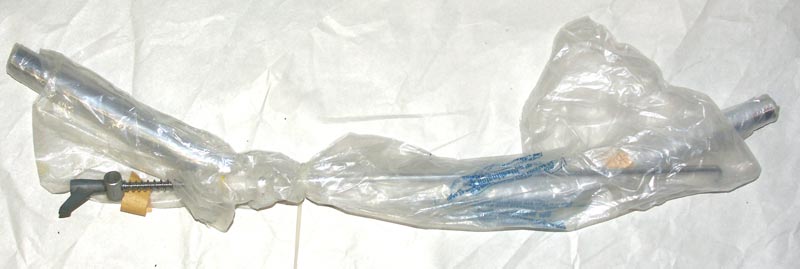
Handlebars, brake rod: I am including these low aftermarket bars because that is what I would prefer, and because they are similar to the Japanese domestic model bars, but am also including the original high bars (see photo elsewhere). The brake rod has been re-chromed as has the spring, and the nut and cam spacer are present.
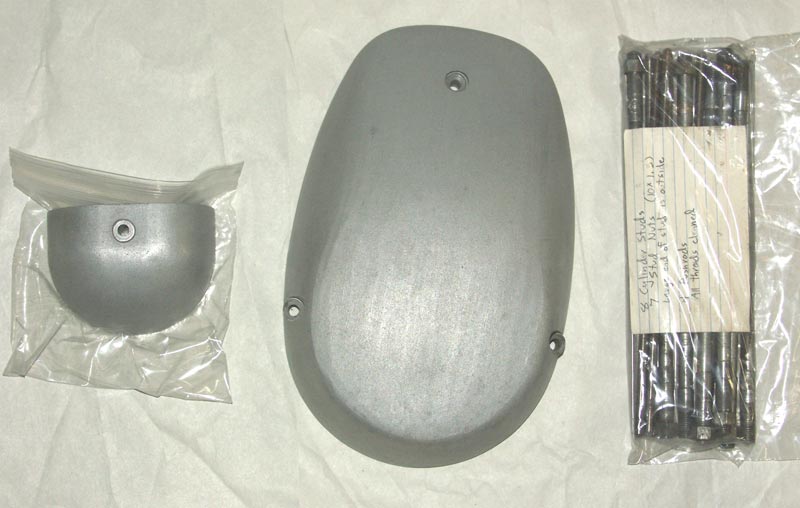
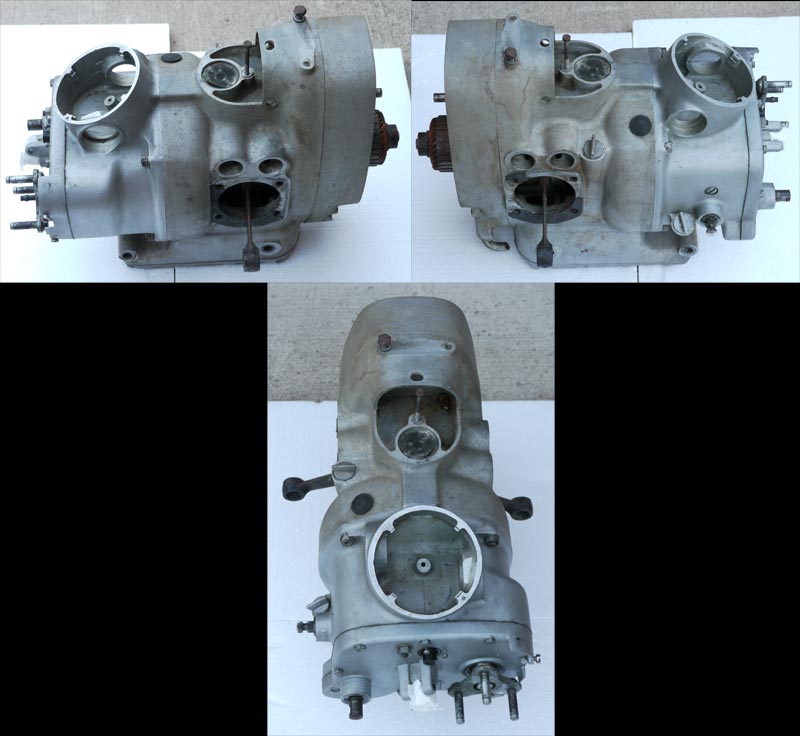
Front and top engine covers (cleaned), cylinder studs, push rods.
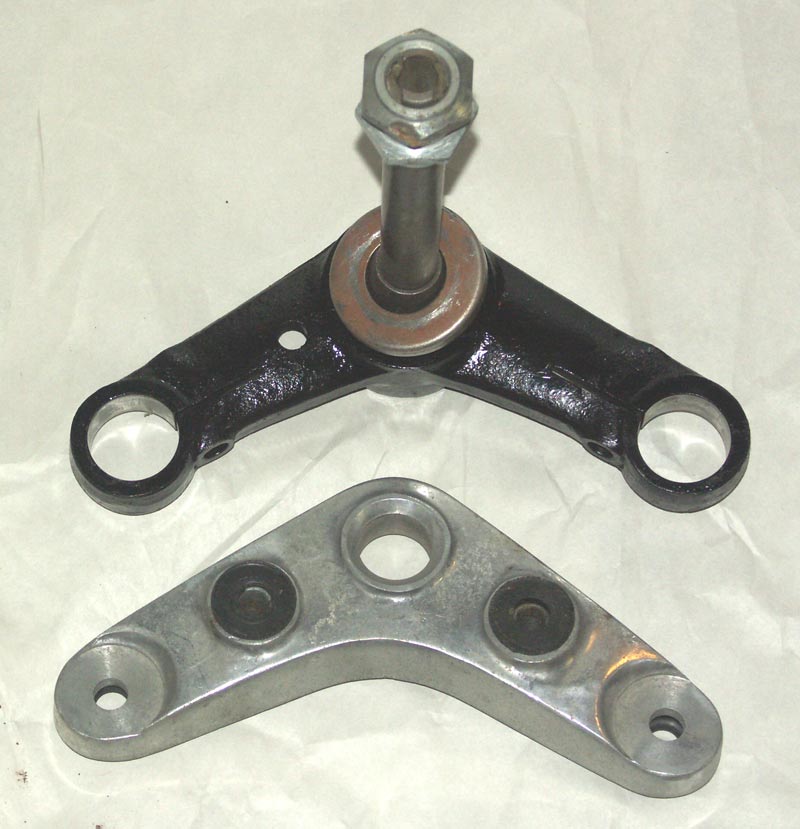
Triple tree, complete with 6 bushings.
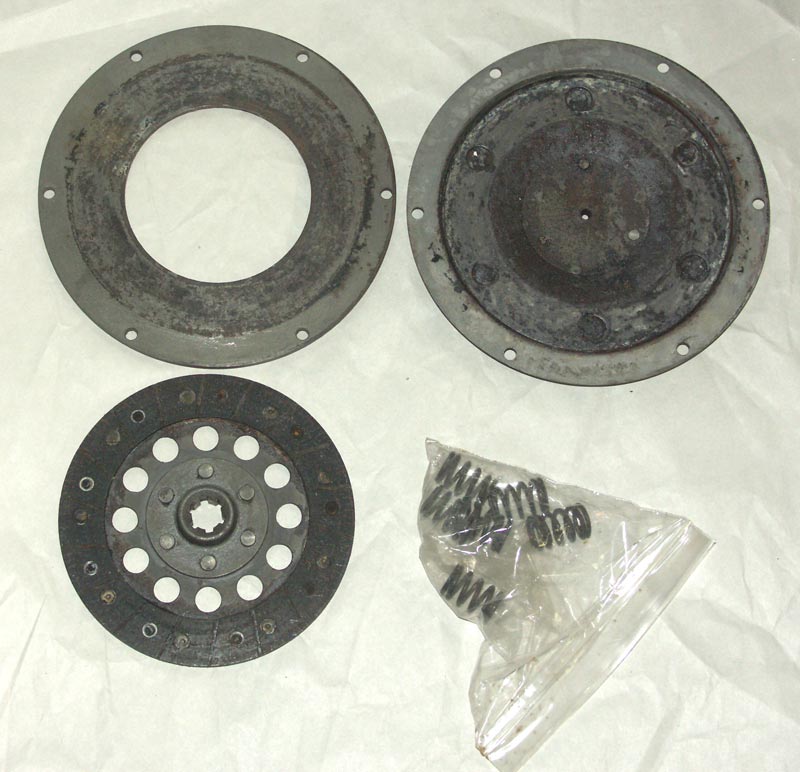
Clutch with 6 springs.
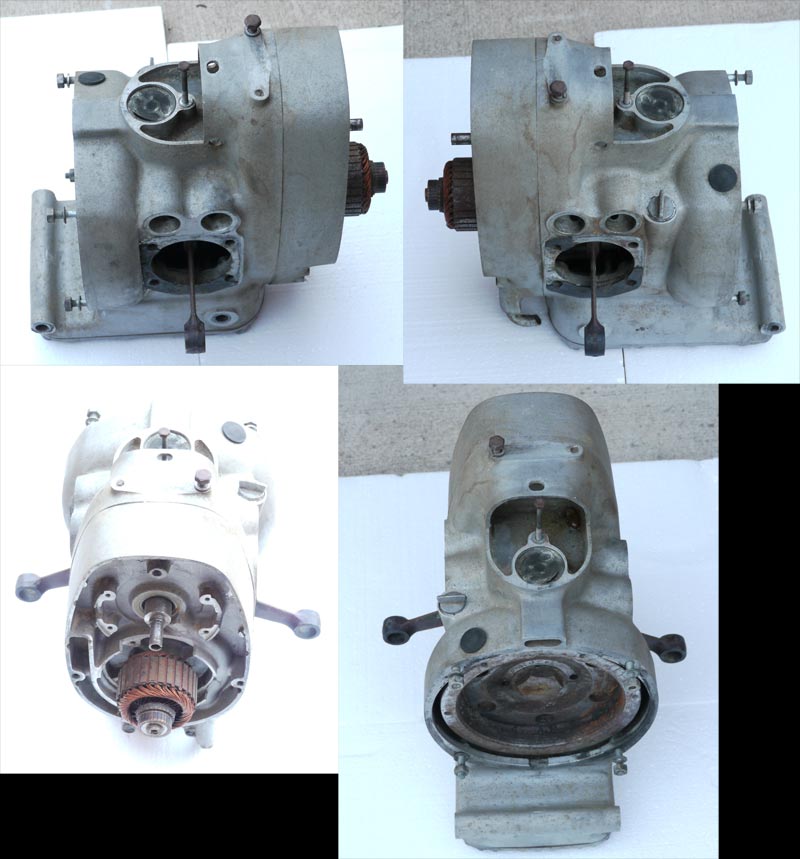
Motor 2-0519 (original motor).
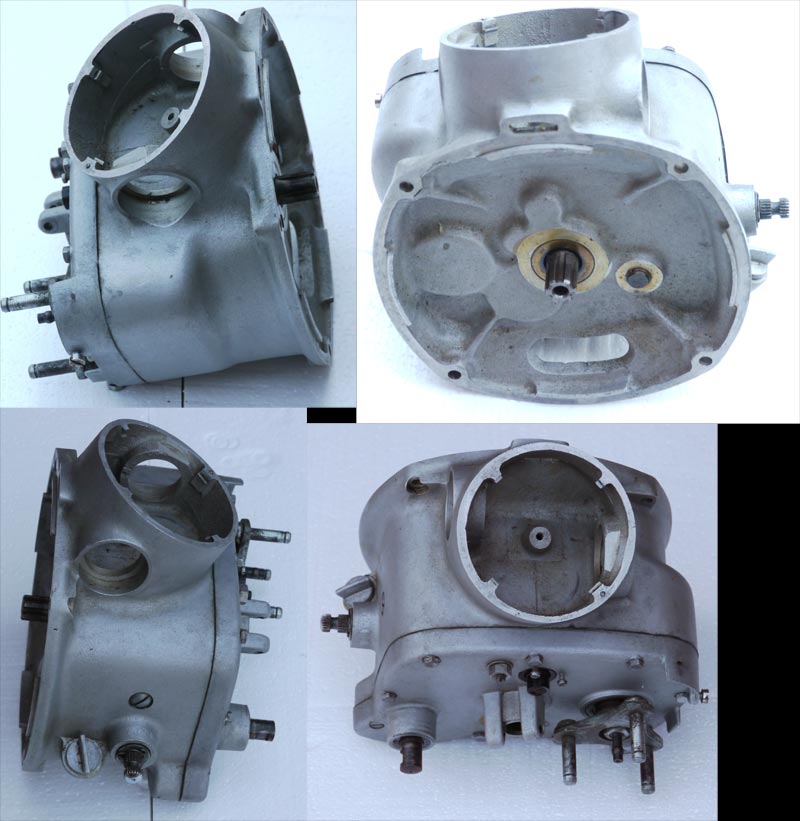
Transmission.
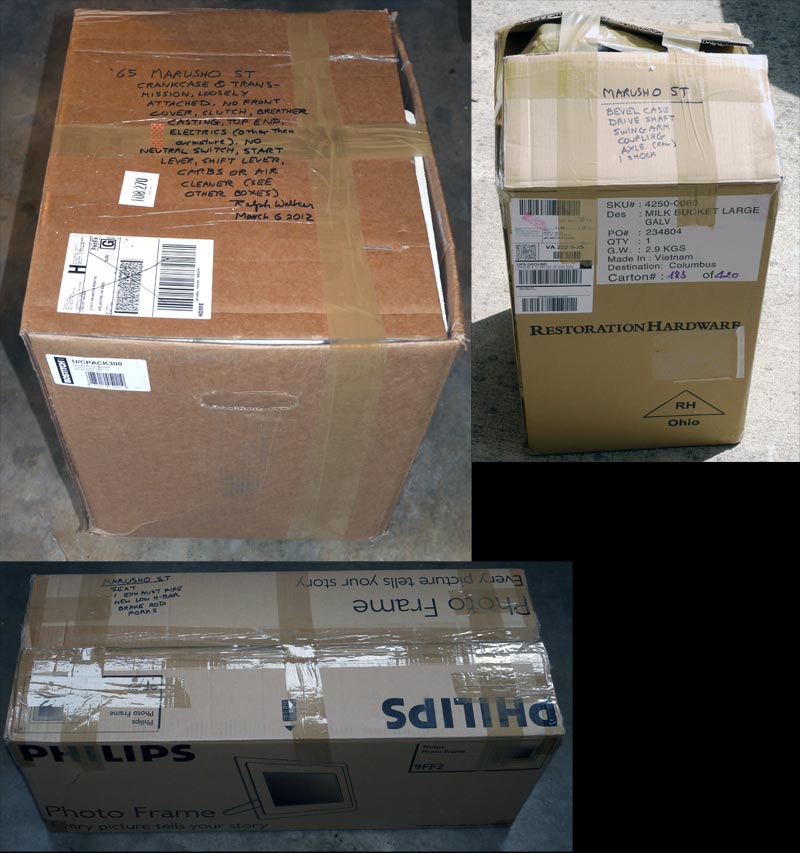
Motor and transmission, loosely assembled for shipping.
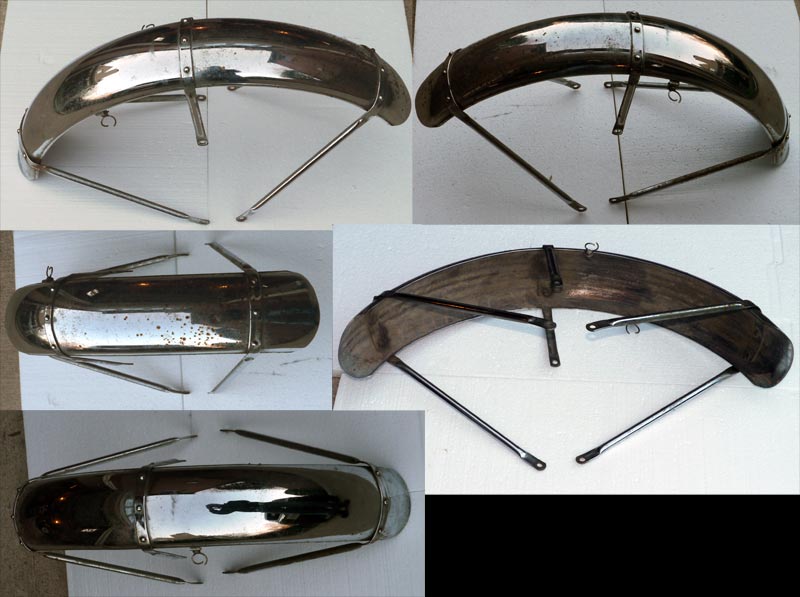
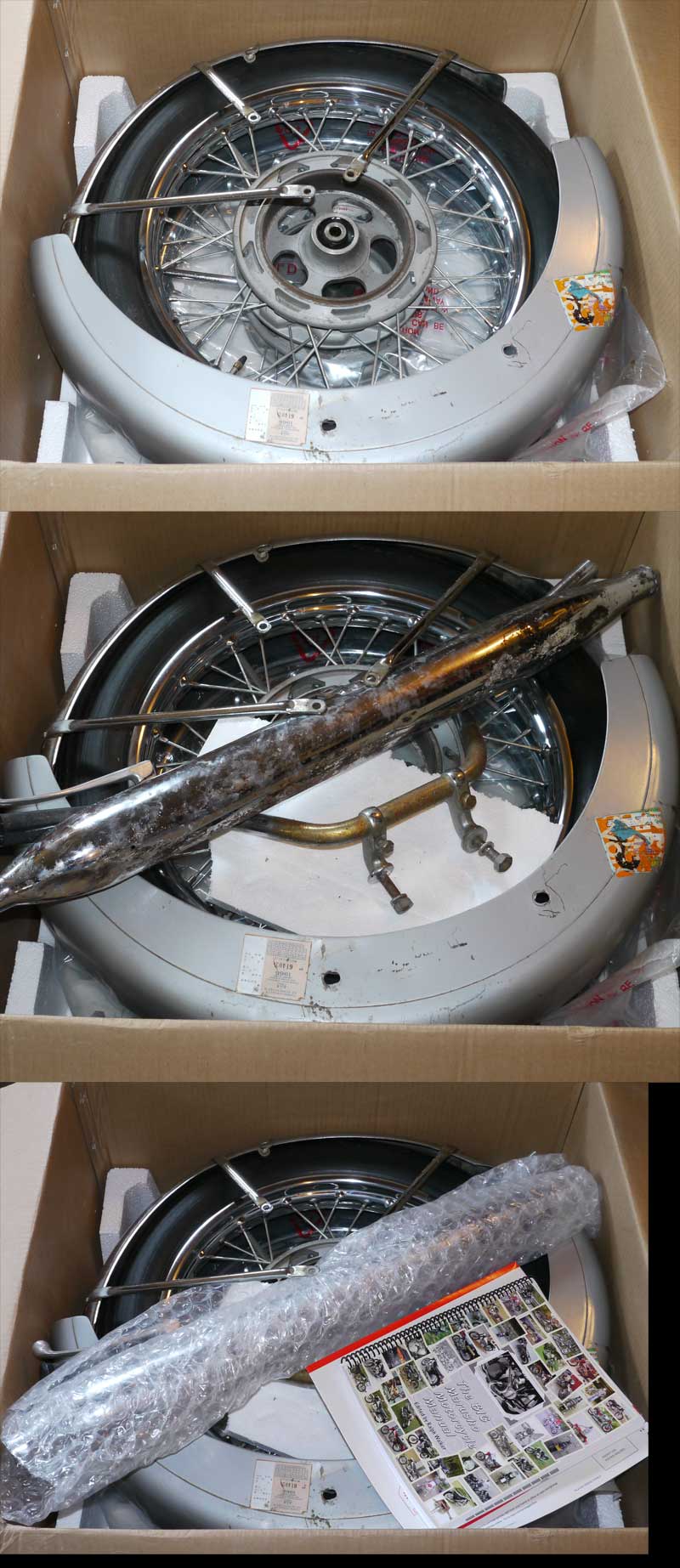
Front fender, good condition with no cracked stays. To chrome plate, the rivets should be drilled out and later replaced with small screws and nuts, as were used on the 1967 model Electra.
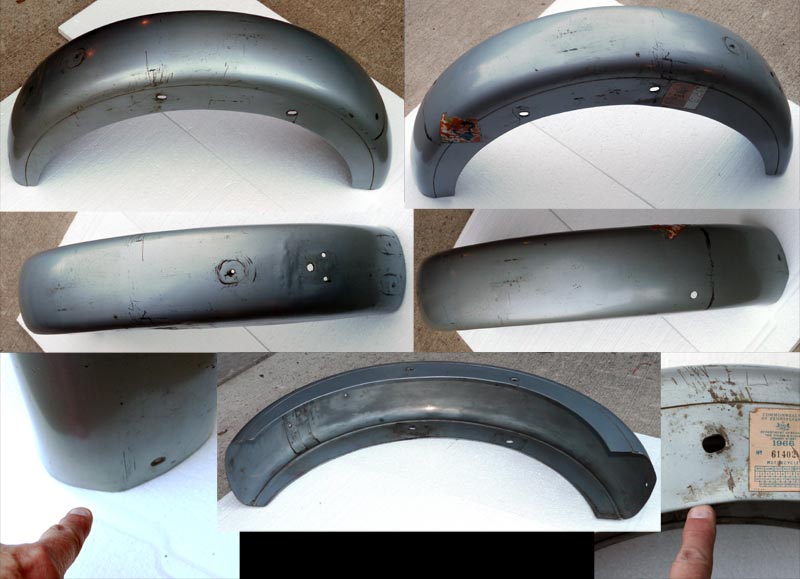
Rear fender, original gray color. Several small defects in areas that are generally not seen.
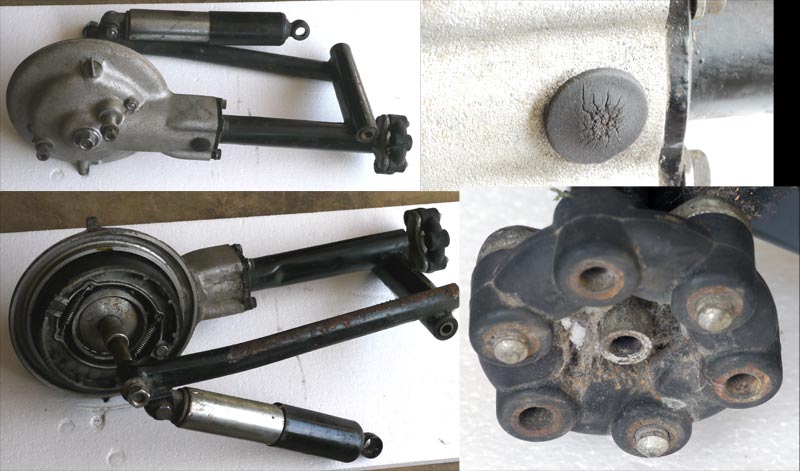
Bevel case, rear hub, driveshaft, swing arm, pretty good rubber coupling, right hand shock absorber. Disassembling the shock couldn't be easier: Just unscrew it (no compression tool needed).
Box 1 packed with wheels, fenders, one muffler, handlebars and a copy of my Marusho manual.
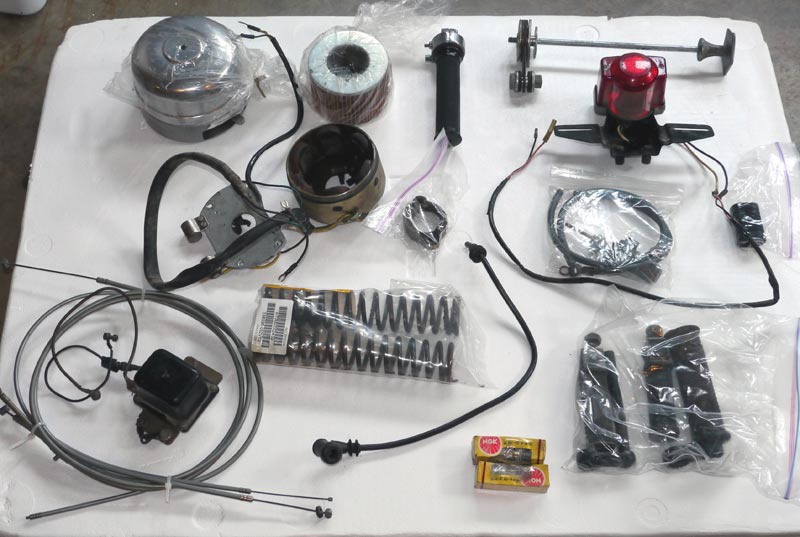
Miscellaneous parts: Excellent and complete air cleaner with element, stator, taillight, regulator and other electrics, NOS cables and new NGK BC-64EW plugs, rough pegs. Reproduction rider peg rubbers are available from a California vendor.
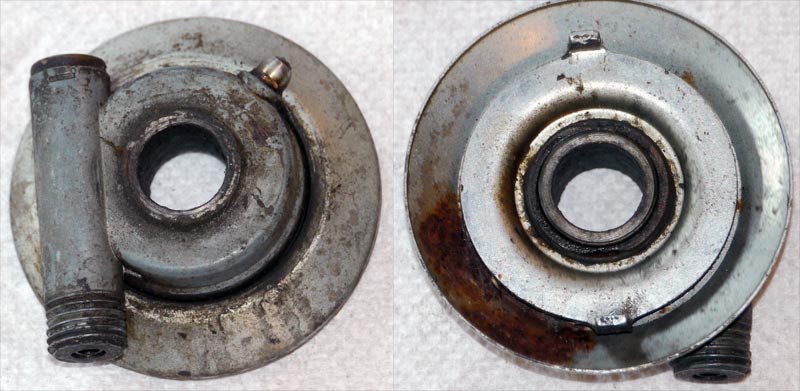
Good speedometer drive. This is one of those items that is frequently bad and for which nobody has found a replacement.
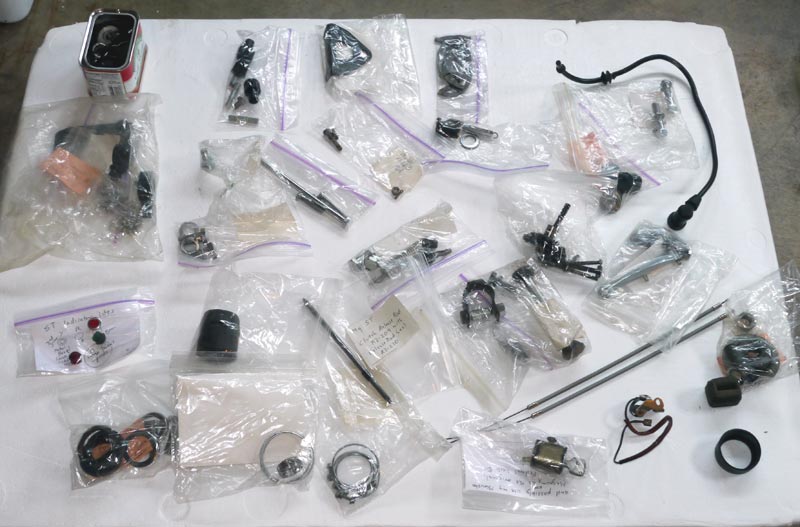
More assorted parts including NOS throttle cables, giving you a full set of 5 NOS cables. A different and superior throttle cable setup was used on this model ST as opposed to the later Magnum and Electra. Also included are some impossible-to-source rubber parts.
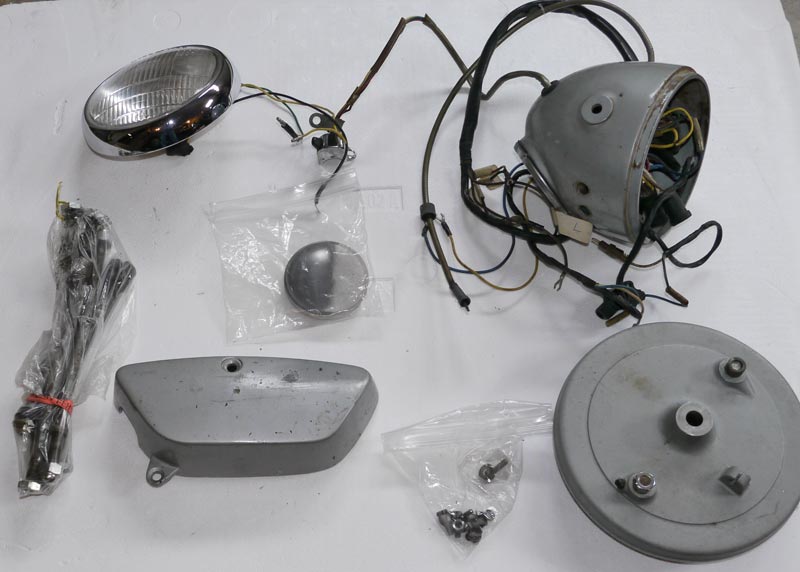
More miscellaneous parts: Headlight assembly, complete; front brake plate, the single sidecover/toolbox, motor mounting bolts, steel type gas cap partially polished. Since it is not possible to chrome this item, my vote would be to polish it highly and then lacquer it, but you can get a new correct-appearing gas cap from another brand bike.
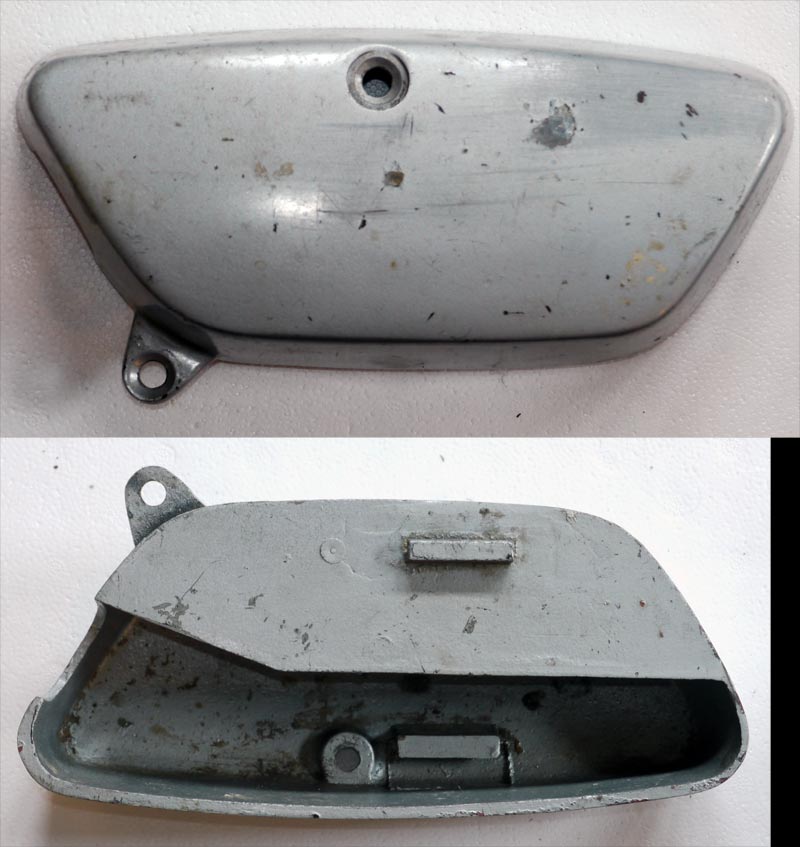
Cast aluminum sidecover / toolbox. Fully half of all Marusho STs are missing their single toolbox. Nothing else fits or looks like this and no one has ever made a reproduction, though you'd think it would be fairly easy for your local foundry. The two items that you cannot replace on a Marusho are the toolbox and the tank badges and this bike has both. The '66 model Magnum used a chromed steel tool box of similar shape, but they are even rarer. The '67 Electra used a pair of very large cast aluminum sidecovers. Here is a good place to admit that I do not have the tool kit that once came with this bike, though I do have one for my '66 Magnum and would be happy to photograph it if you want to assemble a convincing original-style tool kit.
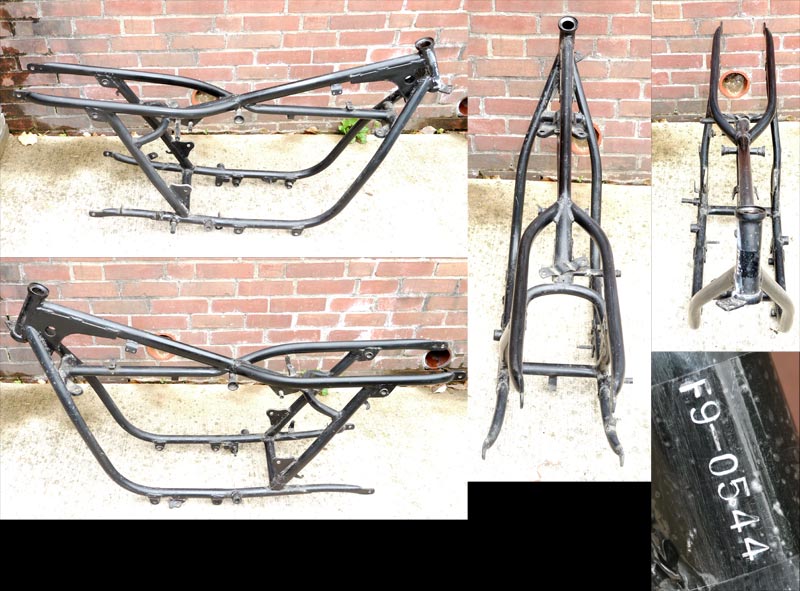
Frame. The VIN (F9-0544) has been chalked and some clear tape placed over it for readability. An inspection hole will be drilled in the crate at the appropriate spot for this number to be examined, should the bike be exported and described as a 'motor vehicle' rather than a 'crate of parts'. This number does match the Virginia title, which is in my name and which will be signed over to you. Few Marushos are titled in the owners' names. In theory you cannot export a motor vehicle from the US without a proper title, though Customs doesn't enforce this too strictly. Still, you are taking a chance if you try to export an untitled vehicle.
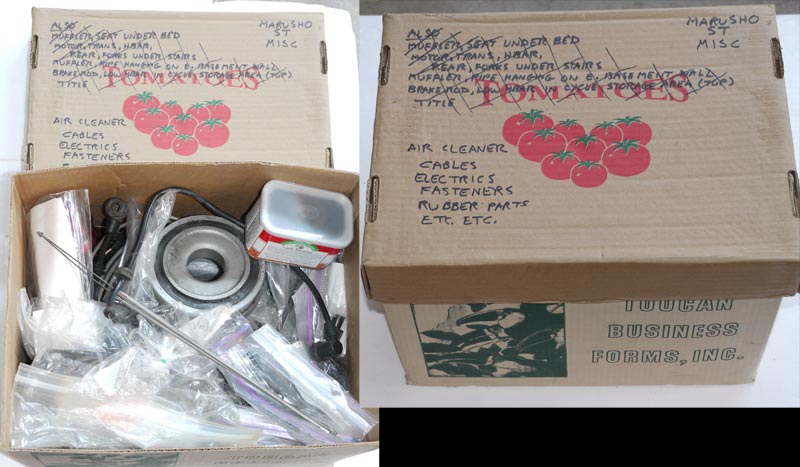
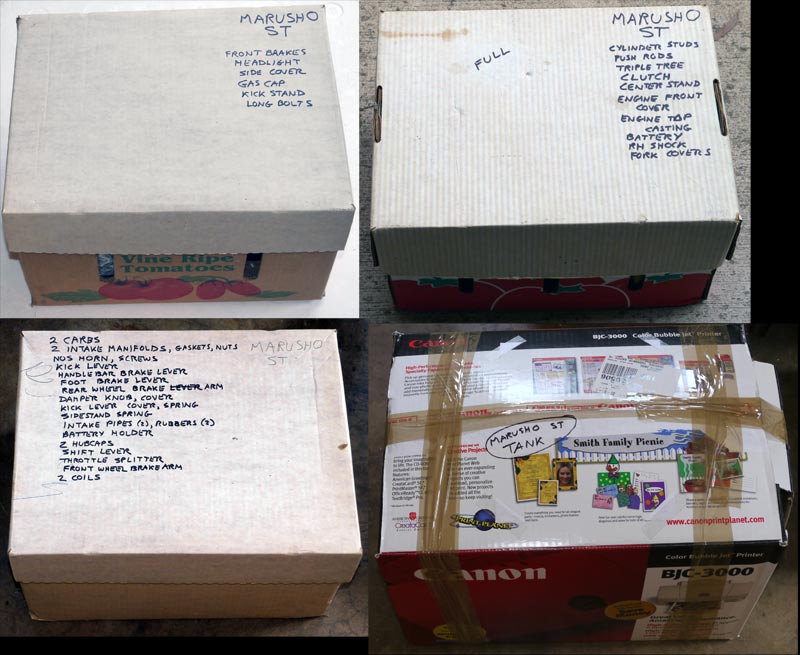
Box 3 containing the parts listed on the lid.
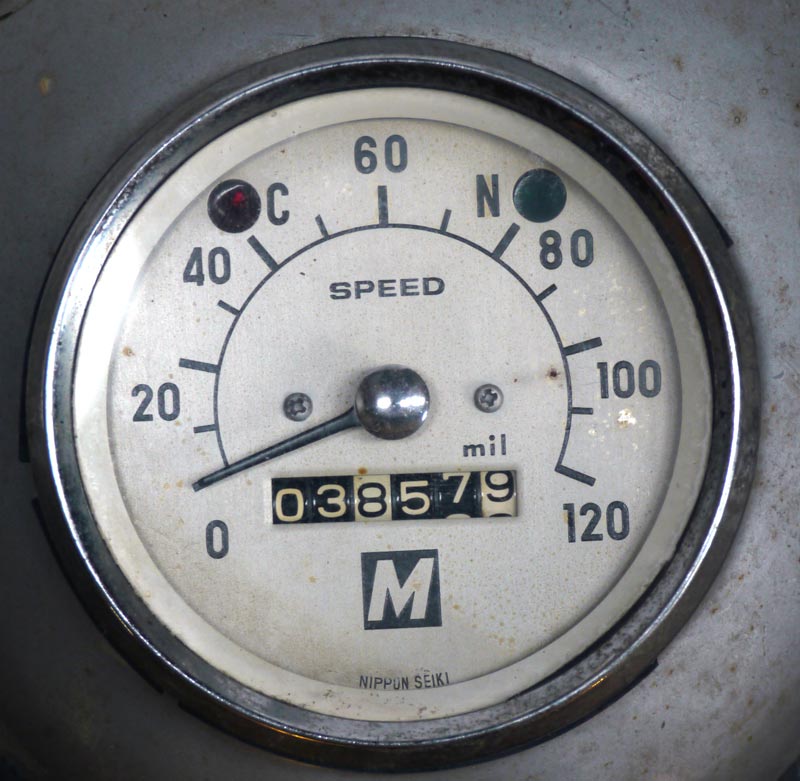
Speedometer, original, with 3857.9 miles. This is a good mileage for a Marusho as it shows that it was pretty reliable (perhaps half never saw 2000 miles), without being used up.
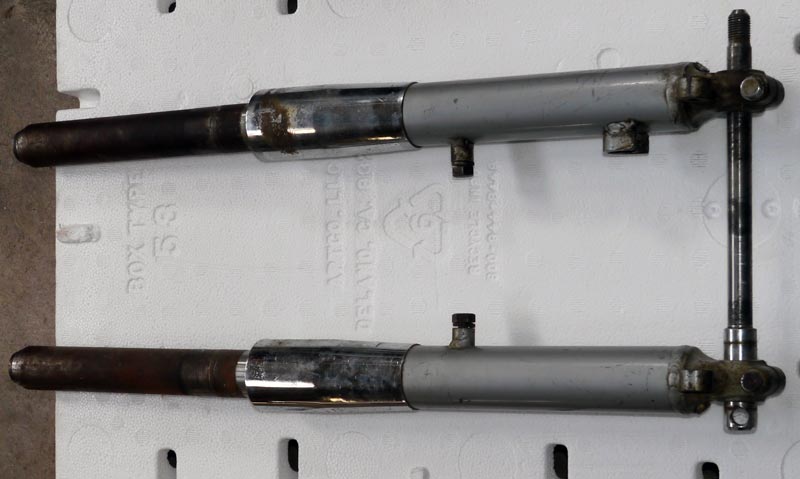
Forks. I won't mislead you. These things are difficult to disassemble. The chromed uppers are threaded to the legs with a fine thread and take a great deal of force to unscrew. Trouble is, you cannot grip them with a pipe wrench or other tool of brute force, without damaging them. I spent some time working on these and haven't succeeded. I used boiling water over a rag tied around them, penetrating oil and a strap wrench. Now it's your turn. My next step was going to be to find a very strong guy who could just uncrew them with a pair of gloves. I thought about taking them to a gym and offering a reward.
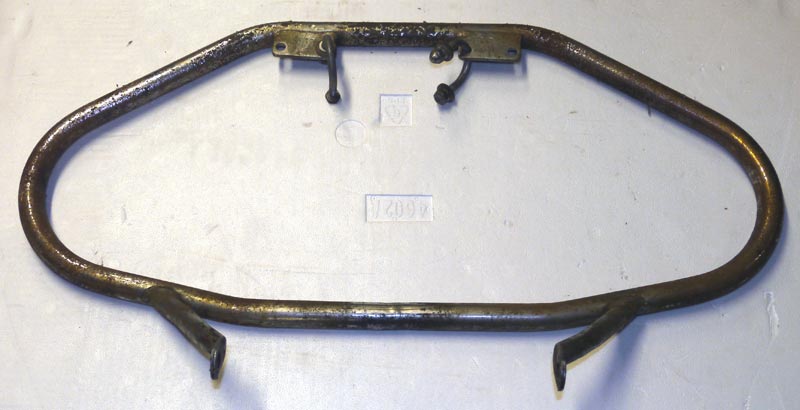
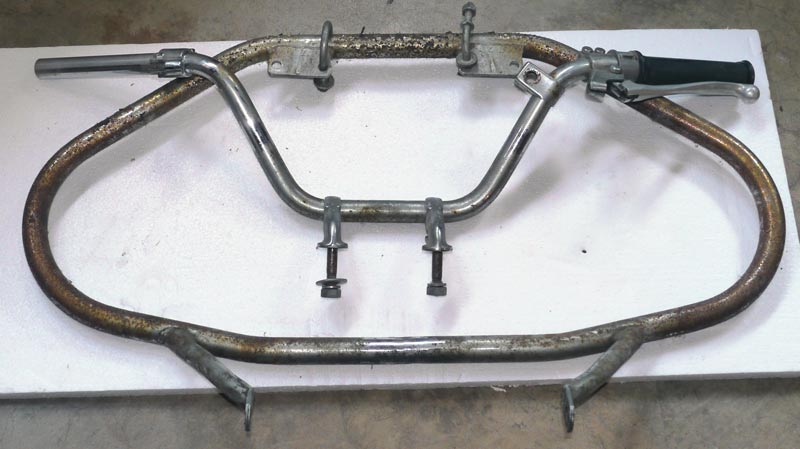
Crash bar. While this was an optional extra, most Marushos were sold with this. Mine may look awful but it is sound and will take chrome plating with no problem. All the mounting hardware is included.
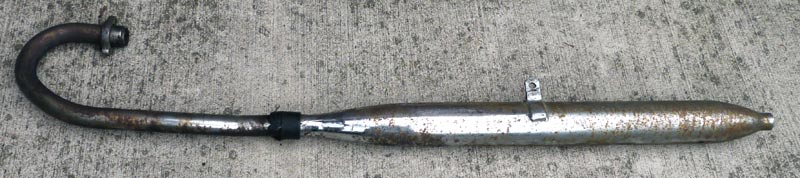
Exhaust system, right side. Why is the muffler attached to the exhaust pipe? They don't want to come apart. This is another of those tasks that I was putting off and now it's your problem. It will be easier than the chore with the forks, however. My advice is to by a new set of stainless steel mufflers from Barry Bligh's company Overlander in Australia. He is himself a Lilac owner, and a contact of mine has bought his Marusho mufflers and reviewed them, so I wouldn't hesitate to recommend them. Barry has been making repro exhausts since 1973. Here's his website: Overlander Stainless Exhausts. The price for a set of mufflers as of May 26, 2012 was AU$615 and a set of pipes AU$350. The Australian dollar is worh about the same as the US dollar. After you get your new mufflers (and possibly new exhaust pipes) you can sell the old mufflers for a good price on ebay. I estimate you can get $200 for the pair, even though they have dents. This is a good time to explain why Marushos have dented mufflers. There is a rectangular rubber bumper which attaches to a tab on the underside of the frame, to prevent the center stand from striking the underside of the mufflers. You will get this part so don't forget to install it. There is an ultra-rare rubber stopper to prevent the kick start lever from hitting the frame also. The first time the bike won't start and the owner violently kicks it 100 times, the rubber on this stopper is destroyed, which is why they are missing. They can and have been reproduced but who knows how to bond this rubber part to the metal strap? Nobody I know. . . . You will get a good stopper. Kick start levers are often busted for the same reason, and may be replaced with bicycle cranks. Broken kick start levers cannot be properly welded or brazed.
Handlebars and crash bar. Read my comments above about the crash bar. These are the original high handlebars as fitted to all North American Marushos. I have included a new low bar (above) which is suitable for the Marusho should you wish to use low bars, as fitted to all non-North American Marushos, known as Lilac R92s.
View 1 of 2 of the boxes of parts.
View 2 of 2 of the boxes of parts.
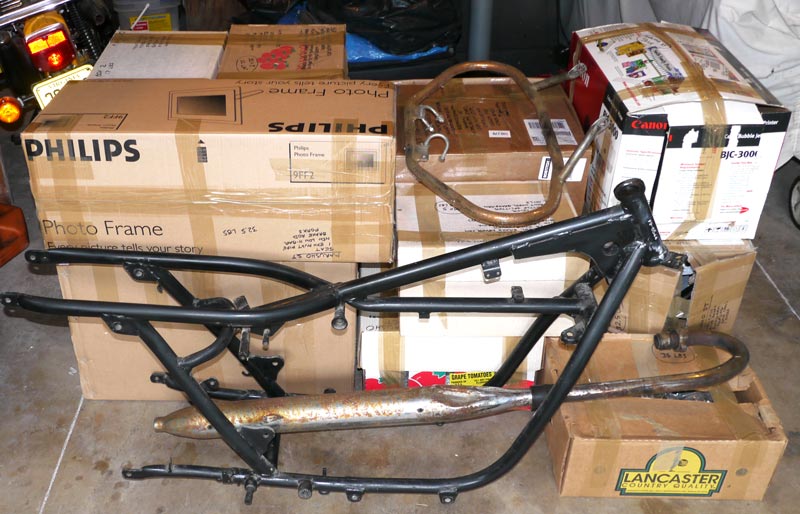
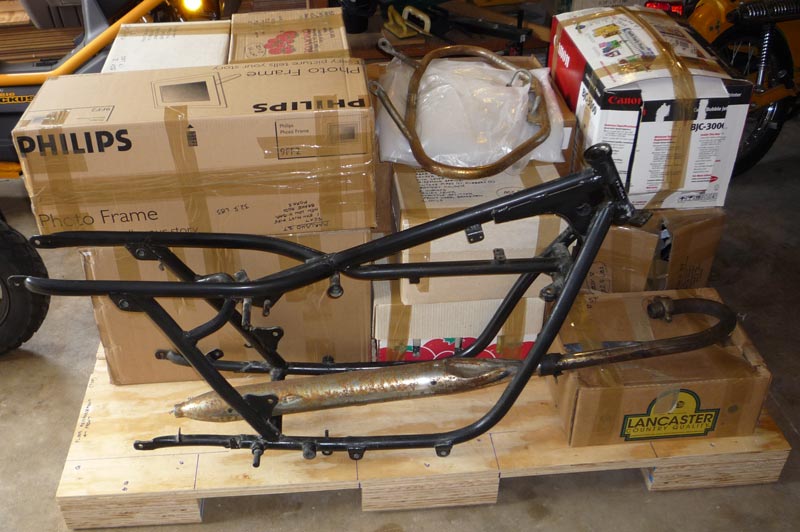
Crate contents. This pile of stuff is arranged as it was placed in the crate. This arrangement was chosen so that the size of the crate will fit in ANY pickup truck bed, still be as small as possible to minimize overseas shipping costs (should the buyer be overseas) and be easily manageable with a forklift or pallet jack. See more details about the crate below.
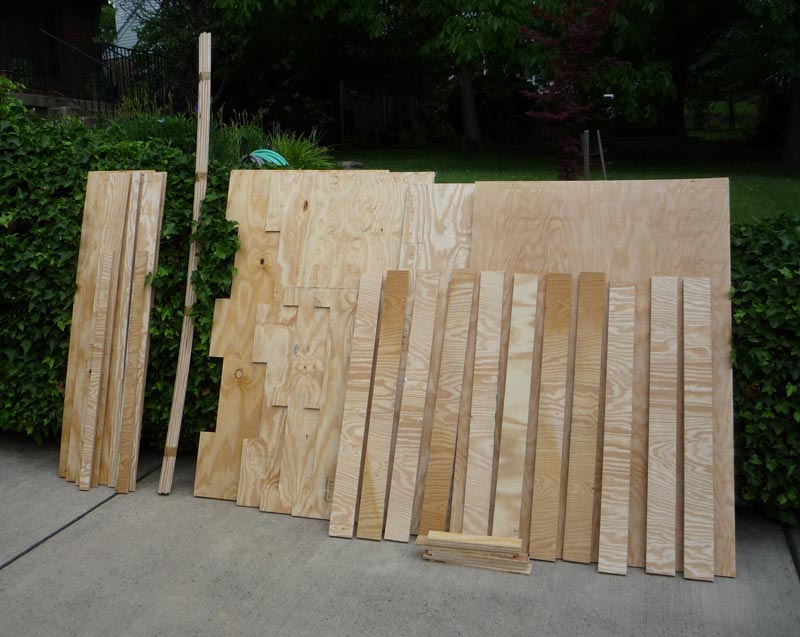
Crate parts ready to assemble. The entire crate was made of plywood, in case the buyer is from the EU. For shipments from the US to an EU country, no coniferous (pine) may be used due to a problem with pinewood nematodes. Since the EU is considering expanding the restrictions to other woods, and requiring special markings on pressure-treated woods, I elected to throw in the towel and just use plywood, which is not regulated. This is just another trade barrier meant to discourage shipments of goods from the US.
The crated bike weighs 670 pounds. This includes 417 pounds for the bike itself as packaged, and 253 pounds for the crate. The dimensions are 65" long x 43" wide x 33.5" high, giving a volume of 54.19 cubic feet or 2.007 cubic yards or 1.534 cubic meters.
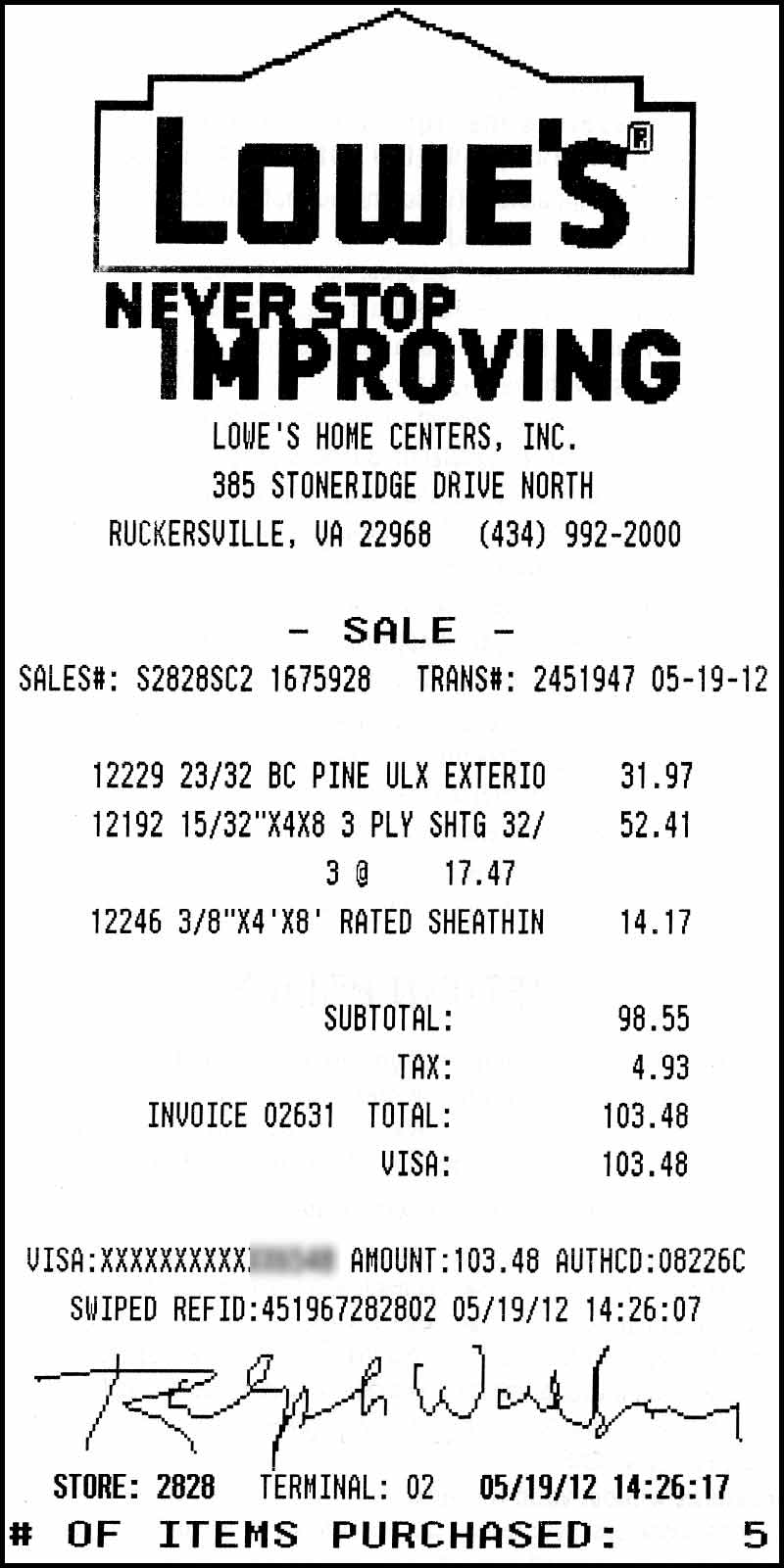
The price includes $130 for my cost of crate materials, which includes $103.48 for plywood, $18.87 for screws and $10.38 for adhesive.
Plywood receipt.
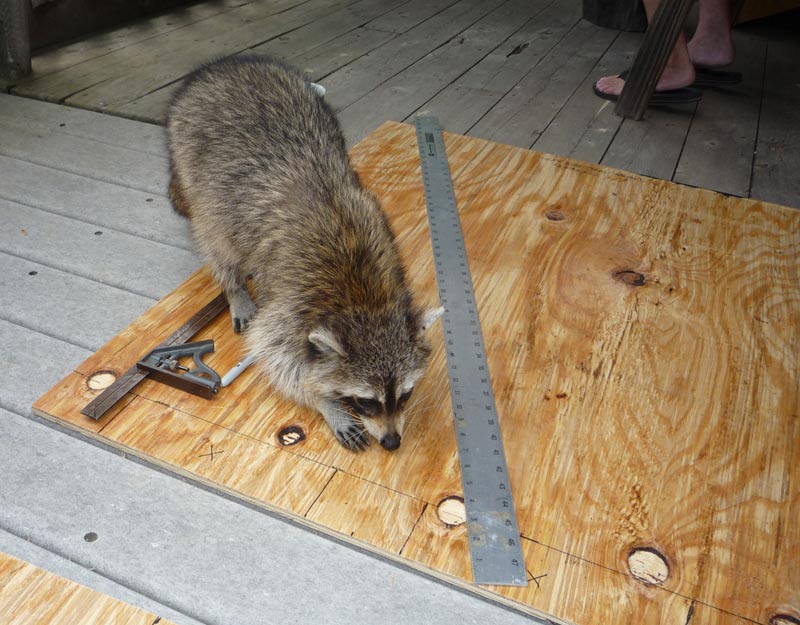
One of our raccoons, Noon, inspects my work.
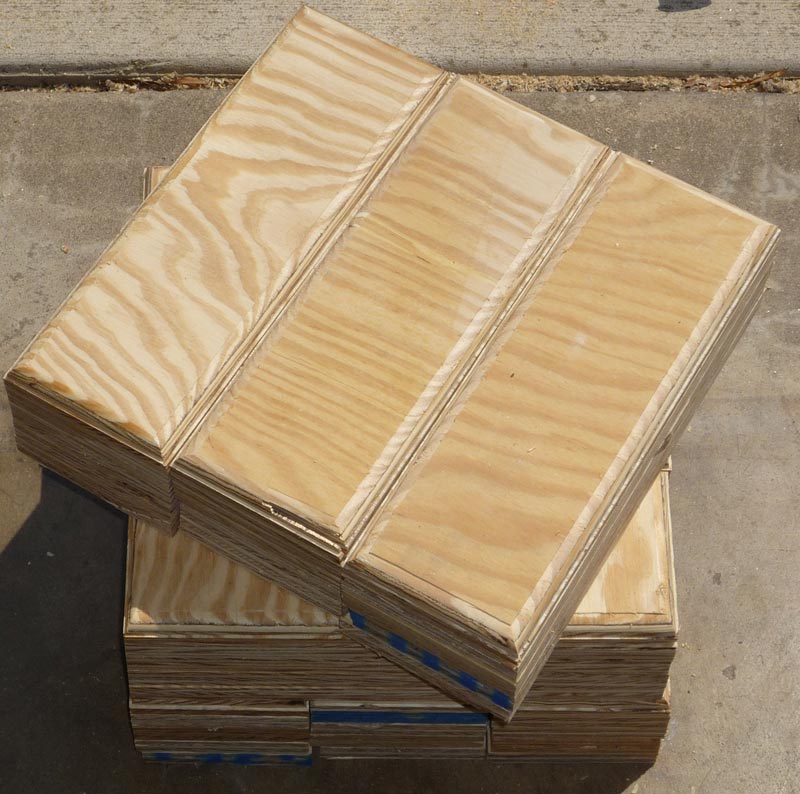
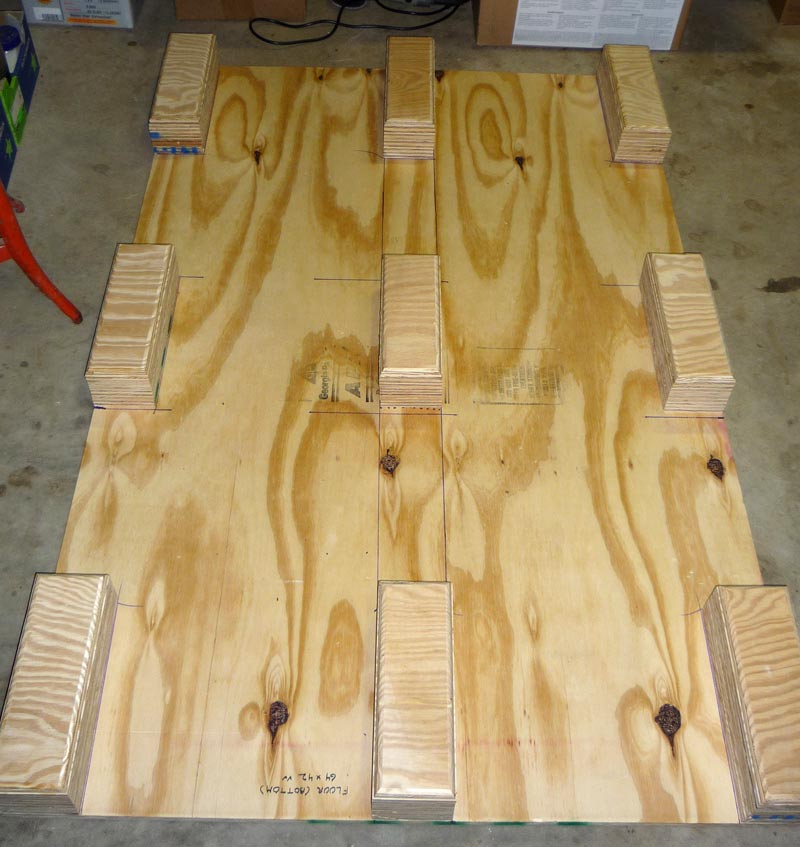
Caption: First, 9 skid rails were built using 5 layers of plywood and adhesive. These are each 12" long x 4" wide by 3.75" high. The bottom edges were rounded to prevent snagging.
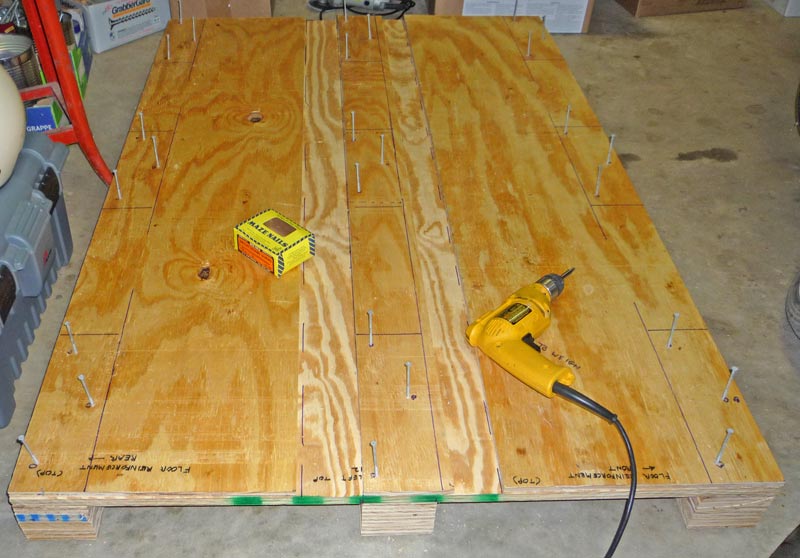
Caption: The (9) rails were glued to the 3/4" plywood floor. Each was then screwed together with (3) 3" screws.
Caption: An additional 1/2" layer of plywood was laminated to the floor. A second set of (27) 3" screws was installed from the top.
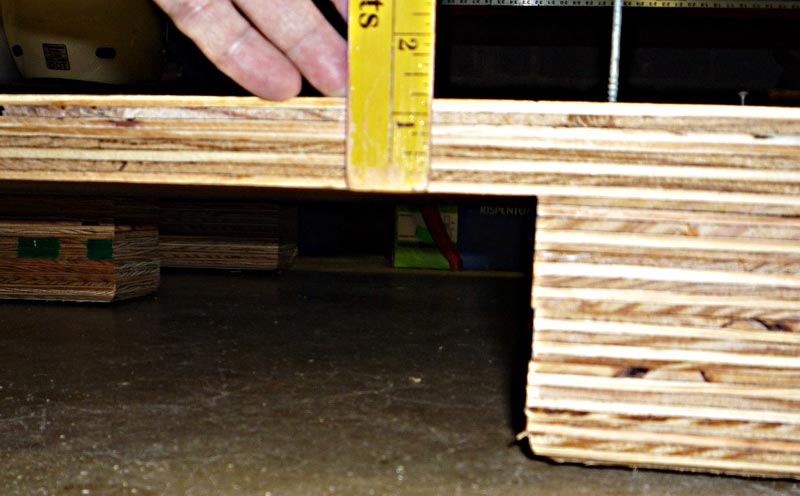
Caption: The floor of the crate is 1.25" thick.
Caption: Bike arranged on crate floor
Caption: The crate sides were reinforced with (2) layers of plywood strips, glued and screwed from both sides. The front and back were reinforced at the top edge.
Caption: The bike and crate as it appears today, June 4, 2012. For shipping I will install a partition to prevent the boxes from shifting, will tie down the frame, crash bar and exhaust, and will add some styrofoam to fill the unused space.
The (4) sides and top are attached using a large number of screws, but no glue. Thus these parts may be readily removed.
Title. This shows the model year as 1966, instead of 1965, because that is when the bike was first titled in Pennsylvania.
